Upgrades
How to make an RC car faster
There are only four levers, they work in a predictable order, and three of them cost almost nothing. The trick is knowing which one you are allowed to pull on the car you actually own.
By Ryder M. · Published October 6, 2026 · Last reviewed
Shock & Servo is reader-supported. If you buy through a link on this page we may earn a commission, at no extra cost to you. It never changes which products we pick or the order we rank them in — the full rules are on our methodology page and our affiliate disclosure.
The fastest cheap way to make an RC car faster is a higher-voltage battery, but only if the car's speed control is rated for it — on a car rated for 2S and 3S, moving from a 2S pack to a 3S pack is roughly a 50% increase in voltage and the single biggest change you can make for the money. After that, in order of value: change the pinion gear for a larger one, fit a brushless motor and speed control, and take weight out. Those four levers are the whole subject. Everything else sold as a speed upgrade is a variation on one of them.
Short version: check the manual for the maximum cell count, and if there is headroom, buy a higher-voltage pack first. If there is not, fit a larger pinion gear — a few dollars, twenty minutes, and watch the motor temperature. Only then consider a brushless conversion, which is the expensive option and the one that starts breaking driveline parts.
The four levers, ranked
| Change | Rough cost | Effect on speed | What it risks |
|---|---|---|---|
| Higher-voltage battery (2S to 3S) | The price of a pack | Large — voltage sets speed directly | Destroys the speed control if the car is not rated for it |
| Larger pinion gear | A few dollars | Moderate | Motor and speed control heat; worse acceleration |
| Brushless motor and ESC | A significant fraction of the car | Large | Torque breaks driveshafts, gears and plastic suspension |
| Remove weight | Free | Small, but improves everything else | Strength, if you remove the wrong things |
| Better tires | Moderate | None on top speed; a lot on usable speed | Nothing — this is the safe one |
1. Battery voltage
Voltage is the number that sets how fast the motor spins, so adding cells adds speed almost linearly. The constraint is the speed control, not the motor: an ESC rated for 2S will not survive 3S, and the failure is immediate and expensive. The car's manual states the maximum cell count, and that figure is a hard limit rather than a cautious suggestion. Where the car does accept 3S — many brushless 1/10 cars do — it is the best value change available. 2S vs 3S LiPo covers the trade, including the heat and the shortened run time, and RC car battery sizes explains how to read the label.
2. Gearing
The pinion is the small gear on the motor shaft; the spur is the large one it drives. A larger pinion makes the car faster at the top end and slower to accelerate, and it makes the motor work harder for the same throttle. This is a genuinely cheap change — the gear costs very little and the job is one screw and a mesh adjustment — but it has a real limit. Go too far and the motor and speed control run hot, and heat is what kills both. The practical method is to go up two teeth, run the car, and put a hand on the motor afterwards: too hot to hold for a few seconds means go back down.
Gearing is also the lever that makes the fast trucks fast. Traxxas quotes over 55 mph stock for the Sledge and 70+ mph with its optional gearing — same truck, same battery, different pinion. That is the whole mechanism, and it is why speed claims on any car should be read alongside what gearing they assume. Our page on 100 mph RC cars goes through that in detail.
3. A brushless motor
A brushless motor has no carbon brushes to wear out, runs cooler and makes far more power than a brushed motor of the same size. Converting a brushed car means replacing both the motor and the speed control together, and on a Traxxas Slash the factory kit for it is the Velineon VXL-3s, which Traxxas quotes as a 60+ mph package. It works, it is dramatic, and it is also the point at which the rest of the car becomes the weak link.
That is not a theoretical concern. Traxxas' own three-phase upgrade guide puts the aluminum center driveshaft in the phase after the brushless conversion, because the standard composite shaft is fine behind a brushed motor and marginal behind a brushless one. Expect to follow a motor upgrade with a driveshaft, and often a servo and shocks as well. First RC car upgrades sets out the order that actually works, and it does not start with the motor.
4. Weight, and the one that is not about speed
A lighter car accelerates harder, stops sooner, corners better and survives crashes more readily, because impact energy scales with mass. There is rarely much to remove from a ready-to-run car beyond unnecessary body hardware and a lighter battery, but it is free and it improves everything else. The related point is tires: tires do not raise top speed at all, and they transform how much of the car's existing speed you can actually use. A fast car that spins its wheels is slower across the ground than a slower one that grips.
The three parts worth buying
| # | Product | Best for | Score | Price |
|---|---|---|---|---|
| 1 | 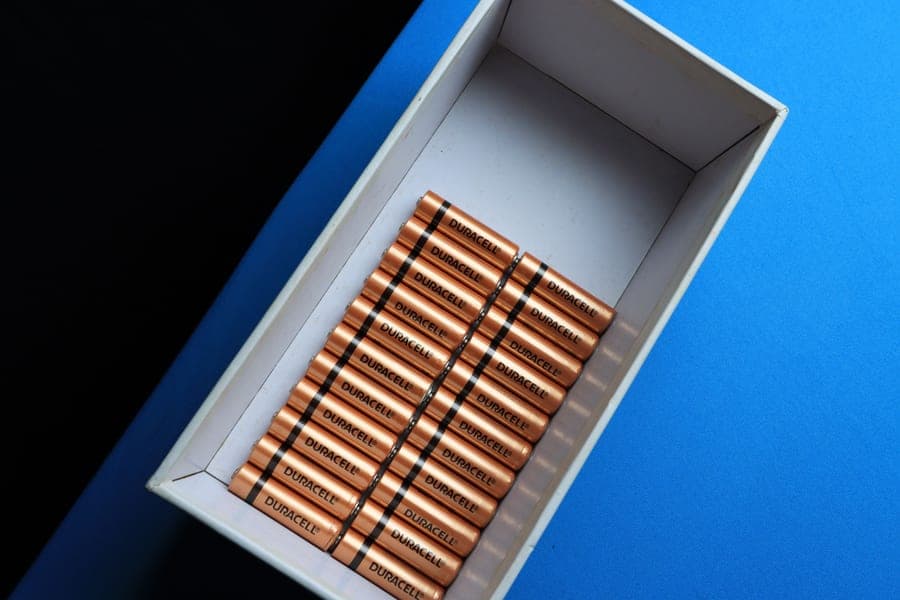 Gens Ace 2S LiPo batteryThe brand most people settle on once they have been burned by a cheap pack that puffed after a month. | The reliable default | 8.7 | |
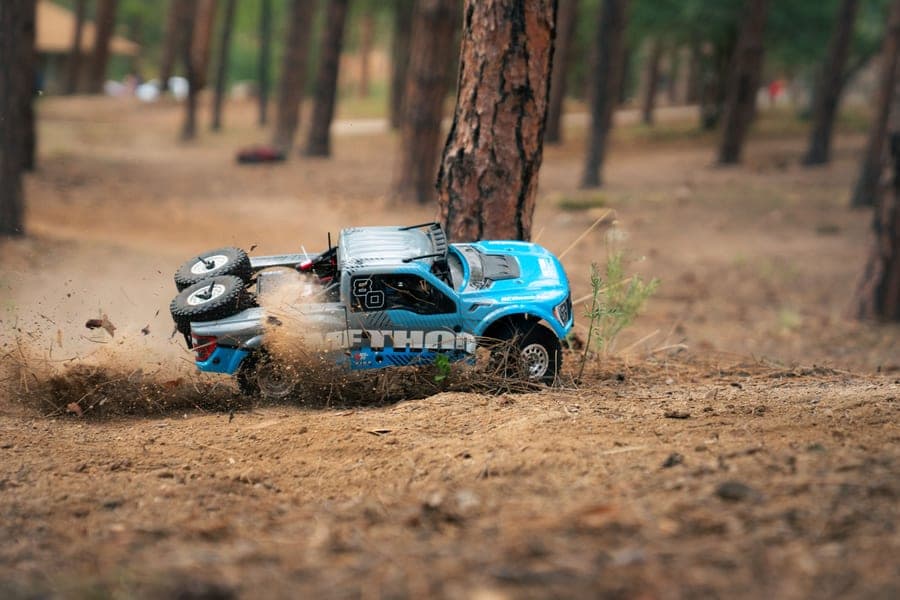
| 2 | Traxxas Velineon VXL-3s Power SystemThe motor-and-speed-control kit that turns a brushed Slash into a 60+ mph one. Fit it last, not first. | Brushed to brushless | 8.4 | |
| 3 | 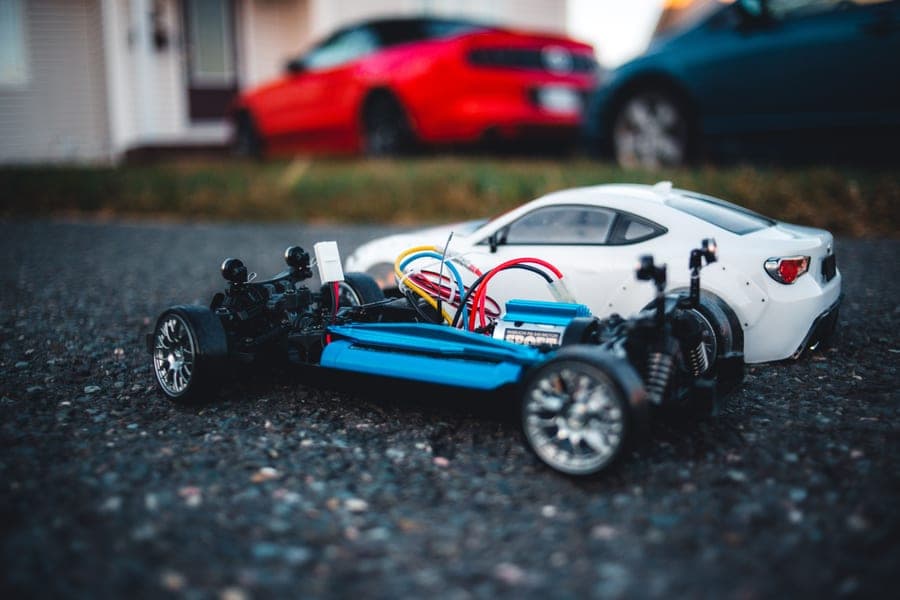 Traxxas Aluminum Center DriveshaftThe extruded aluminum shaft that replaces the composite one, because the composite one is what gives way under brushless power. | After going brushless | 8.2 |
Illustrative photo — not this exact model.
#1 · The reliable default
Gens Ace 2S LiPo battery
The brand most people settle on once they have been burned by a cheap pack that puffed after a month.
8.7/10our score for this use
LiPo is the standard rechargeable battery chemistry for RC cars: lighter than the older NiMH type and it holds its power right up to the end of the run rather than gradually fading. 2S means two cells — the size most 1/10 cars take.
What it does well
- Consistent pack-to-pack quality, which is the whole argument for paying more for a battery
- Holds voltage under load, so the car feels the same on lap ten as on lap one
- Sold in all the common connector types and sizes
What it does badly
- Costs more than the budget brands for capacity you can measure but may not notice
- Like all LiPo packs it must be stored at partial charge, not full, or it degrades
- Needs a balance charger — it cannot be charged with the wall plug from a toy car
Illustrative photo — not this exact model.
#2 · Brushed to brushless
Traxxas Velineon VXL-3s Power System
The motor-and-speed-control kit that turns a brushed Slash into a 60+ mph one. Fit it last, not first.
8.4/10our score for this use
A brushless motor has no carbon brushes to wear out, runs cooler and makes far more power. The VXL-3s is the complete factory conversion — motor, speed control and wiring — and Traxxas quotes 60+ mph performance from it.
What it does well
- Roughly doubles the performance of a brushed truck in a single purchase
- Includes Training Mode, so the extra power can be halved again for a younger driver
- No maintenance — there are no brushes to replace
What it does badly
- The most expensive item on this page by a wide margin
- Everything downstream breaks more often once power goes up. Do the suspension first
- A 60 mph truck needs open space that a 30 mph truck did not
Specifications from the Traxxas Slash 4X4 upgrade guide.
Illustrative photo — not this exact model.
#3 · After going brushless
Traxxas Aluminum Center Driveshaft
The extruded aluminum shaft that replaces the composite one, because the composite one is what gives way under brushless power.
8.2/10our score for this use
The center driveshaft carries power from the transmission to the axles. A standard Slash 4X4 uses a composite plastic shaft, which is fine behind a brushed motor and marginal behind a brushless one. Traxxas lists the aluminum shaft, plus the matching drive hub, in phase three of its upgrade path.
What it does well
- Directly addresses the part that starts failing once power goes up
- Cheap relative to the brushless system that creates the need for it
- The matching drive hub part number is published, so there is no guesswork
What it does badly
- Pointless on a brushed truck — the composite shaft is adequate at that power level
- Needs the separate drive hub to fit, which is a second purchase
- Metal transmits more driveline noise than plastic
Specifications from the Traxxas Slash 4X4 upgrade guide.
What not to do
- Do not exceed the stated cell count. It is the one mistake on this page that destroys electronics immediately rather than gradually.
- Do not gear up and ignore the heat. A motor too hot to touch is a motor being shortened. Check it after every run for the first few.
- Do not make a toy-grade car faster. The chassis, gears and suspension of a toy-grade car are already at their limit — hobby grade vs toy grade explains why the money is better spent on a different car.
- Do not speed up a child's first car. Speed can always be added later; a frustrated beginner usually does not come back. Our age pages set out what each bracket can actually control.
- Do not buy a speed upgrade before a second battery. More driving time beats more speed on almost every real afternoon.
When the answer is a different car
If the car is toy-grade, or if the target is a speed the platform was never designed for, upgrading is the expensive route to a broken car. A brushless 1/10 machine starts at a price that a full set of upgrades on a cheap car would approach, and it arrives engineered as a whole. The best brushless RC cars for beginners and the best RC trucks for adults are the honest alternatives to a long upgrade path.
How we assessed this
From the mechanics of each change — what it does to voltage, gearing, current and mass — and from the manufacturers' own upgrade documentation where it exists. Traxxas' three-phase upgrade guide and its stated speed figures for the Sledge and the VXL-3s system are linked in Sources. We do not test these products first-hand; our methodology page explains what that means.