Start with the person, not the product. Pick their age band and get a shortlist that matches what they can actually steer, how hard they will crash it, and what happens when something snaps.
Shock & Servo is reader-supported. If you buy through a link on this page we may earn a commission, at no extra cost to you. It never changes which products we pick or the order we rank them in — the full rules are on our methodology page and our affiliate disclosure.
Almost every RC site organizes itself by vehicle type or by brand, which is useful if you already know what a short-course truck is. If you are buying a gift, you do not — you know how old the person is. So that is where this site starts.
Why age decides more than budget does
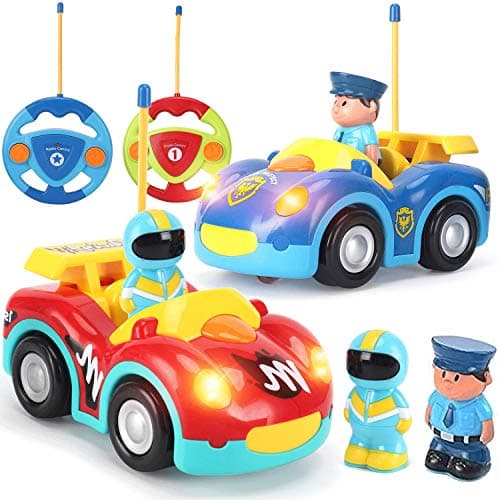
The limiting factor in a child's RC car is almost never the car. It is whether their hands can do two things at once. A hobby-grade transmitter has a trigger for the throttle and a wheel for the steering, and both are proportional — squeeze a little, go a little. That takes a level of fine motor control most children reach around five. Below that, a two-button controller is not a lesser product, it is the correct tool.
That single fact reshapes the buying decision at every age. At three, you want slow and simple. At five, treaded tires so the car can leave the patio. At eight, a car whose parts can be replaced, because they will break something. At twelve, durability, because they will break several things. Our guide to what age an RC car is right for works through each bracket in detail.
The three things that go wrong
1.Too much speed. The most common mistake by a wide margin. A fast car handed to a beginner is a broken car within a month, and a frustrated child immediately. Speed can always be added later with a bigger battery or an unlocked power mode; a smashed chassis cannot be undone.
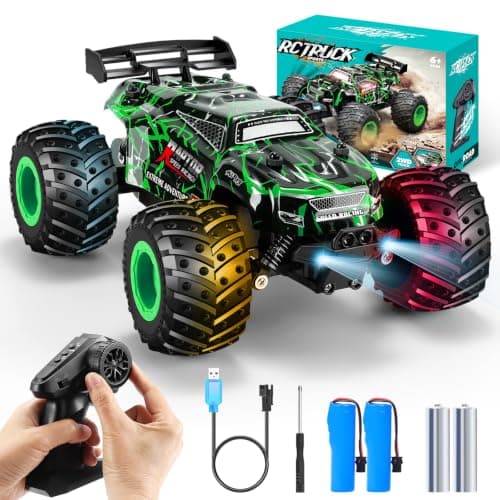
2.Not enough run time. Twenty minutes of driving followed by ninety minutes of charging is the point at which an RC car goes into a cupboard. A second battery is the cheapest fix in this hobby and the one almost nobody thinks of.
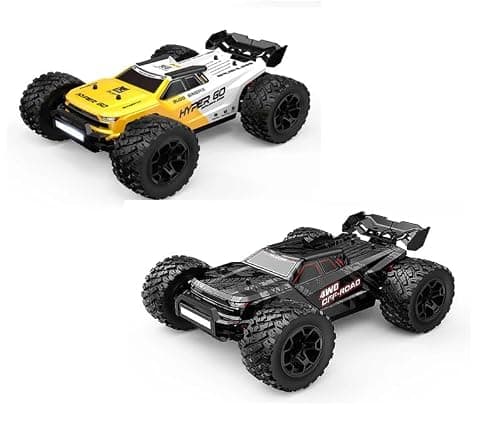
3.A car that cannot be repaired. Above about eight, children crash hard enough that this matters. A sealed toy-grade car ends at the first serious impact; a hobby-grade one is a few dollars and twenty minutes. That distinction is set out in hobby grade vs toy grade.
If you would rather start from a number than an age, the gifts by budget hub answers the same question from the other direction — and every page there links back across this age row.
Younger children
Simple controls and slow speeds. At these ages the controller matters far more than the car, and toy-grade is the right choice rather than a compromise.
Eight to twelve is where hobby-grade starts to pay for itself: they can drive properly, they will crash it hard, and being able to buy a replacement part is what keeps the gift alive.
From three with a two-button controller, from five with a simple trigger, and from eight for a genuine hobby-grade car. The deciding factor is the controller rather than the car itself.
What is the best RC car for a child?+
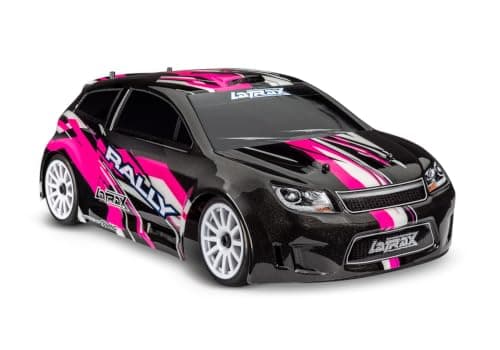
It depends entirely on their age. Under five, a slow two-button toy. Six to eight, a four-wheel-drive toy-grade car with two batteries. Eight and up, an entry hobby-grade car such as the Traxxas LaTrax Rally.
How much should I spend on an RC car for a child?+
Under $50 for a preschooler, $60-$100 for ages six to ten, and $150-$250 for older children who will use it hard. Spending more than that buys performance a child cannot yet use.
Should I buy a hobby-grade car for a young child so it lasts?+
No. A hobby-grade car is faster, heavier and harder to control — the opposite of what a young child needs. Buy age-appropriate now and revisit at about eight, when repairability genuinely starts to pay.
What is the most common mistake when buying an RC car as a gift?+
Buying too much speed. A fast car for a beginner produces a broken car and a frustrated driver. The second most common is forgetting that a single battery means a twenty-minute session.