Before you buy
How fast do RC cars go?
From walking pace to 65 mph and beyond. Here is what each category genuinely does, and how much speed is actually useful.
By Ryder M. · Published September 27, 2026 · Last reviewed
Shock & Servo is reader-supported. If you buy through a link on this page we may earn a commission, at no extra cost to you. It never changes which products we pick or the order we rank them in — the full rules are on our methodology page and our affiliate disclosure.
Toy-grade cars run 5-15 mph. Budget hobby cars run 20-30 mph. Brushless hobby cars run 35-45 mph. The fastest mainstream bashers exceed 65 mph — Traxxas states 65+ mph for the Rustler 4X4 VXL with a 3-cell LiPo and optional speed gearing. Rock crawlers move at walking pace by design.
Speed by category
| Type | Typical top speed | What that feels like |
|---|---|---|
| Toddler toy car | 3-8 mph | Walking to jogging pace; a toddler can chase it |
| Toy-grade car for a child | 8-15 mph | Quick across a yard; easy to keep up with |
| Budget hobby-grade | 20-30 mph | Faster than you can run; needs open space |
| Brushless mid-range | 35-45 mph | Genuinely quick; crashes break things |
| High-end brushless basher | 50-65+ mph | Car-park speeds; a large open area is essential |
| Rock crawler | 2-5 mph | Walking pace, deliberately |
Published figures worth knowing
- Traxxas Rustler 4X4 VXL: Traxxas states 65+ mph with a 3-cell LiPo and 20/54 speed gearing, and about 55 mph on an 11.1V pack without it. Training Mode cuts that to roughly 15 mph.
- MJX HYPER GO 16207: MJX quotes 62 km/h — about 38 mph — on a 3S battery.
- MJX HYPER GO 14210: 55 km/h, about 34 mph.
- DEERC 9206E: around 48 km/h, about 30 mph.
- BEZGAR HM161: above 40 km/h, around 25 mph.
Cars at each end of the range
| # | Product | Best for | Score | Price |
|---|---|---|---|---|
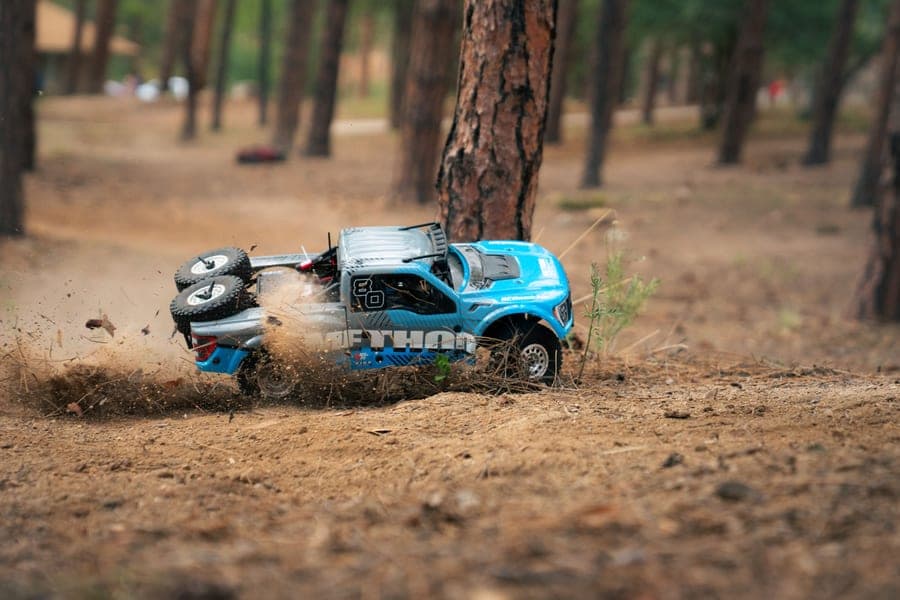
| 1 | Traxxas Rustler 4X4 VXLVery fast, and the only reason it suits a beginner is the built-in Training Mode that halves the power. | Speed, with a limiter | 8.9 | |
| 2 | 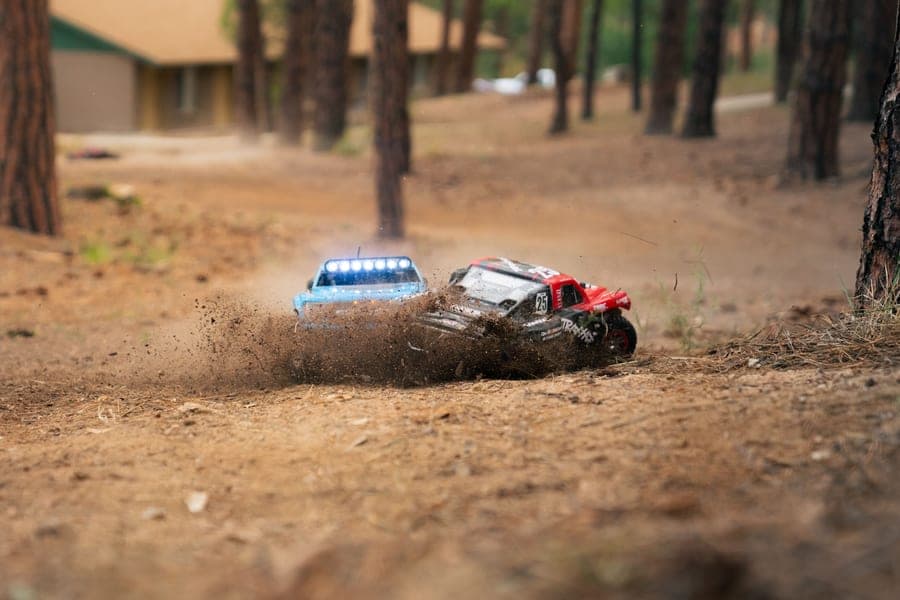 MJX HYPER GO 16207A brushless motor at a price that normally buys a brushed one — very fast, and more car than a young child should have. | Most speed per dollar | 8.4 | |
| 3 | DEERC 9206E 1:10 Monster TruckA full 1:10-size truck at a price that usually buys something half the size — and two batteries again. | A big truck, small money | 8.0 | |
| 4 | 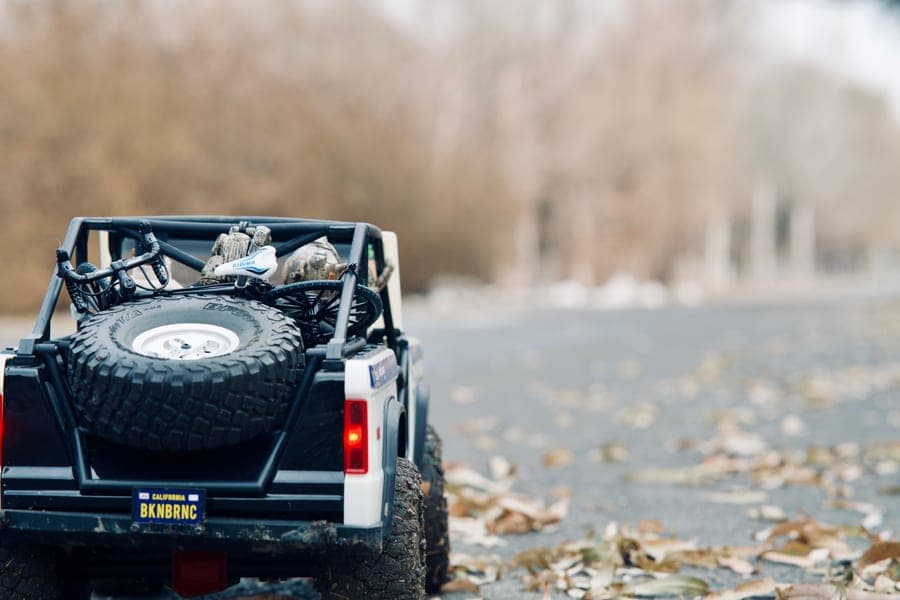 Axial SCX24Under eight inches long, four-wheel drive, and it turns a living room floor into a trail. | Indoor crawling | 8.6 |
Illustrative photo — not this exact model.
#1 · Speed, with a limiter
Traxxas Rustler 4X4 VXL
Very fast, and the only reason it suits a beginner is the built-in Training Mode that halves the power.
8.9/10our score for this use
A stadium truck — open wheels, big tires, built to jump. Traxxas states 65+ mph with a 3-cell LiPo and the optional speed gearing, and, crucially, a patented Training Mode that cuts throttle and reverse to 50%. You can hand it to a child on the low setting and unlock the rest later.
- Size:
- 1/10
- Drive:
- Shaft-driven 4WD
- Motor:
- brushless motor
What it does well
- Training Mode cuts the power in half — a genuine answer to "this is too fast for them"
- Waterproof electronics and a waterproof receiver box, so weather stops being a factor
- Traxxas parts support, which is the best in the hobby
What it does badly
- At full power it is a 60-plus mph vehicle. That is not a child's toy, and it needs open space
- No battery or charger included — the real cost is meaningfully higher than the sticker
- Open wheels catch on curbs and fences in a way the Slash's bodywork does not
Specifications from the Traxxas Rustler 4X4 VXL product page.
Illustrative photo — not this exact model.
#2 · Most speed per dollar
MJX HYPER GO 16207
A brushless motor at a price that normally buys a brushed one — very fast, and more car than a young child should have.
8.4/10our score for this use
Brushless means the motor has no wearing carbon brushes inside: more power, less maintenance, and a much higher price historically. MJX put one in a 1/16 truck and quotes 62 km/h — around 38 mph — on a 3S battery, with metal gears and metal-bodied shock absorbers.
- Size:
- 1/16
- Drive:
- 4WD
- Motor:
- brushless motor
What it does well
- Brushless power and metal drivetrain parts at a price that used to buy neither
- Genuinely fast — this is the one that impresses a teenager
- Metal-bodied oil shocks rather than the plastic friction dampers at this price point
What it does badly
- Too fast for a young child. Below about twelve it is frustrating rather than fun
- Parts come through MJX sellers, not a hobby-shop shelf — a broken part can mean a wait
- Speed and light weight are a bad combination on hard surfaces; it breaks front suspension arms
Specifications from MJX's HYPER GO product page.
Illustrative photo — not this exact model.
#3 · A big truck, small money
DEERC 9206E 1:10 Monster Truck
A full 1:10-size truck at a price that usually buys something half the size — and two batteries again.
8.0/10our score for this use
1:10 is the size most hobby cars are: roughly 17 to 20 inches long, big enough to see across a yard and heavy enough that grass does not throw it around. DEERC quotes around 48 km/h — roughly 30 mph — and includes two batteries.
- Size:
- 1:10 (about 17-20 inches long)
- Drive:
- 4WD
- Motor:
- toy-grade motor
What it does well
- Proper 1:10 size, so it works on real ground instead of only on a driveway
- Two batteries in the box, and around 40 minutes of combined run time
- Some versions include a second body shell
What it does badly
- Not hobby-grade: spares are DEERC-only and thinner than Traxxas or Arrma
- Heavy for its build quality — a bad landing bends parts a hobby chassis would shrug off
- The stock tires wear quickly on asphalt
Specifications from DEERC's own store listing.
Illustrative photo — not this exact model.
#4 · Indoor crawling
Axial SCX24
Under eight inches long, four-wheel drive, and it turns a living room floor into a trail.
8.6/10our score for this use
A 1/24 scale crawler — smaller than a shoe — sold as several licensed bodies including Jeep, Ford Bronco, Chevrolet C10 and a Power Wagon. It is a complete ready-to-run package with a small LiPo battery and USB charger, and it crawls over table legs, stairs and garden rockeries at walking pace.
- Size:
- 1/24 (under 8 inches long)
- Drive:
- Full-time 4WD
- Motor:
- brushed motor
What it does well
- Small enough to use indoors year-round, which no other hobby-grade car on this site can claim
- Slow, so crashes barely exist — the failure mode is tipping over, not breaking
- A huge aftermarket of upgrade parts if the hobby sticks
What it does badly
- Tiny. If the person you are buying for wanted something impressive to look at, this is not it
- Not fast, and it never will be
- The included battery is small, so a spare pack is an obvious early purchase
Specifications from Axial's brand pages at Horizon Hobby.
How much speed do you actually need?
Less than most buyers think. Above about 30 mph, the limiting factor stops being the car and becomes the space you have. A 45 mph truck in a normal yard will spend its life hitting things; the same truck in an empty parking lot is superb. Match the speed to the space first, and to the driver second — our age guide covers the second part.
What makes an RC car faster
- More battery voltage. 3S instead of 2S is the single biggest change, and it must be within the speed control's stated range.
- Gearing. A larger pinion gear raises top speed and lowers acceleration — and raises motor temperatures.
- A brushless motor, if the car is currently brushed. See brushed vs brushless.
- Tires and surface. A car geared for dirt will not reach its quoted speed on grass.
How we assessed this
Every specific figure on this page is quoted from the manufacturer's own materials and converted where necessary. We do not measure speeds ourselves and do not publish a number we could not source — see our methodology page.