Guide
Are RC cars illegal?
No federal law bans RC cars and no license is required to operate one. What does exist is a patchwork of local rules about where — and that is where almost every real problem comes from.
By Ryder M. · Published October 17, 2026 · Last reviewed
Shock & Servo is reader-supported. If you buy through a link on this page we may earn a commission, at no extra cost to you. It never changes which products we pick or the order we rank them in — the full rules are on our methodology page and our affiliate disclosure.
No. RC cars are legal to own and operate in the United States, and no license or permit is required to drive one. The radios they use sit in the public, license-exempt bands governed by the FCC's Part 15 rules for radio-frequency devices — the same regulatory category as a cordless phone or a wi-fi router — so the responsibility for compliance sits with the manufacturer who certified the transmitter rather than with you. There is no RC equivalent of the FAA's drone registration, because a car on the ground is not an aircraft.
Direct answer: owning and driving an RC car requires no license, no registration and no test. What is restricted is *where*: individual parks, schools, sports fields, car parks, homeowner associations and private property all set their own rules, and those are the rules that actually get enforced. On a public road you are also subject to ordinary obstruction and nuisance law.
Why no license is needed
An RC transmitter is a low-power radio device, and the FCC regulates that whole class under Part 15 of its rules. The compliance burden falls on the manufacturer: the device is tested and authorized before sale, and anything sold legally in the United States already carries that authorization. The user does not need a callsign, a license or an examination. This is the same reason you do not need a license for a baby monitor or a garage door opener, and it is a genuinely different situation from amateur radio, where the operator is licensed rather than the equipment.
Two practical consequences follow. First, do not modify a transmitter to increase its power — that is the one thing that moves a device outside its authorization, and it is also pointless, since range is almost never the limiting factor on a car. Second, buy equipment sold for the U.S. market. A transmitter intended for another region may use frequencies or power levels that are not authorized here, which is a real if uncommon problem with parallel-import imports.
Where the real restrictions are
| Place | Usually allowed? | Who decides |
|---|---|---|
| Your own property | Yes | You, and noise ordinances |
| A public park | Varies widely | The parks department or city ordinance |
| A school field or playground | Often not | The school district |
| A sports pitch or golf course | No | The groundskeeper, for obvious reasons |
| A private car park | Needs permission | The owner or management company |
| A public road | No, in practice | Obstruction and nuisance law |
| A skate park | Often not, when in use | The operating authority |
| An HOA common area | Frequently restricted | The homeowner association |
Cars that keep you out of trouble
| # | Product | Best for | Score | Price |
|---|---|---|---|---|
| 1 | 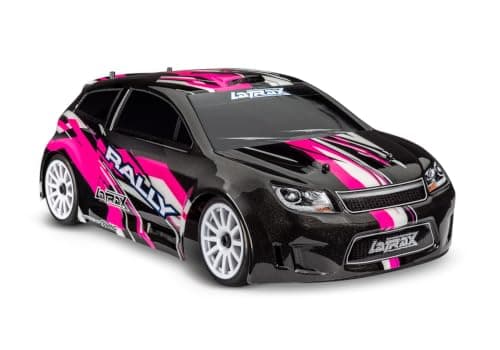 Traxxas LaTrax RallyWaterproof, four-wheel drive, and it comes with a battery and a charger — the friendliest way into the real hobby. | A family's first hobby car | 8.8 | $139.95View on Amazon #ad — how we earn · price as of November 12, 2026 |
| 2 | 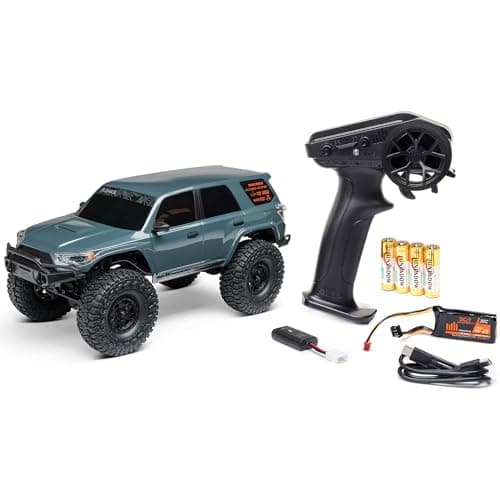 Axial SCX24Under eight inches long, four-wheel drive, and it turns a living room floor into a trail. | Indoor crawling | 8.6 | $159.99View on Amazon #ad — how we earn · price as of November 12, 2026 |
| 3 | 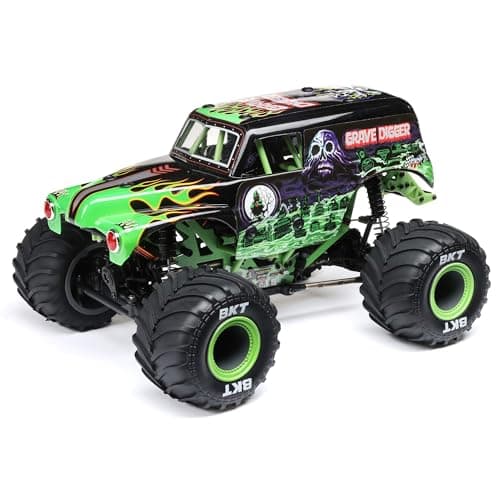 Losi Mini LMTA solid-axle monster truck in miniature, sold in the Grave Digger and Son-uva Digger liveries kids already know. | Licensed monster trucks | 8.4 | $248.50View on Amazon #ad — how we earn · price as of November 12, 2026 |
Product photo via Amazon.
#1 · A family's first hobby car
Traxxas LaTrax Rally
Waterproof, four-wheel drive, and it comes with a battery and a charger — the friendliest way into the real hobby.
8.8/10our score for this use
A 1/18 rally car from Traxxas, meaning it is about half the size of the trucks you see at a track but built by a company with parts in real hobby shops. Traxxas lists waterproof all-weather electronics, a 6-volt NiMH battery and a wall charger in the box, and a speed control with drive profiles that include a training mode.
- Size:
- 1/18
- Drive:
- Shaft-driven 4WD
- Motor:
- brushed motor
What it does well
- Battery and charger are included, so the gift works the day it is opened
- Waterproof electronics — wet grass and puddles are genuinely fine
- A training mode that limits the power, then full power later, so the car grows with the driver
- Traxxas parts are stocked by hobby shops and easy to order
What it does badly
- The NiMH battery it ships with is slower and heavier than a LiPo, so the first upgrade is obvious
- Low-slung rally body grounds out on thick grass — it prefers gravel, dirt and pavement
- Costs noticeably more than the toy-grade cars it sits beside on a search results page
Specifications from the Traxxas LaTrax Rally product page.
#ad — how we earn · price as of November 12, 2026
Product photo via Amazon.
#2 · Indoor crawling
Axial SCX24
Under eight inches long, four-wheel drive, and it turns a living room floor into a trail.
8.6/10our score for this use
A 1/24 scale crawler — smaller than a shoe — sold under several licensed bodies, including the Toyota 4Runner stocked here plus Jeep, Chevrolet C10 and Dodge Power Wagon versions. It is a complete ready-to-run package with a Spektrum radio, a LiPo battery and a charger included, and it crawls over table legs, stairs and garden rockeries at walking pace.
- Size:
- 1/24 (8-9 inches, depending on body)
- Drive:
- Full-time 4WD
- Motor:
- brushed motor
What it does well
- Small enough to use indoors year-round, which no other hobby-grade car on this site can claim
- Slow, so crashes barely exist — the failure mode is tipping over, not breaking
- A huge aftermarket of upgrade parts if the hobby sticks
What it does badly
- Tiny. If the person you are buying for wanted something impressive to look at, this is not it
- Not fast, and it never will be
- The included battery is small, so a spare pack is an obvious early purchase
Specifications from Axial's own brand site.
#ad — how we earn · price as of November 12, 2026
Product photo via Amazon.
#3 · Licensed monster trucks
Losi Mini LMT
A solid-axle monster truck in miniature, sold in the Grave Digger and Son-uva Digger liveries kids already know.
8.4/10our score for this use
1/18 scale, four-wheel drive, with an aluminum chassis, solid axles, a four-link suspension and metal differentials — the layout of a real monster truck, shrunk. It runs a brushed 380-size motor, so it is quick without being uncontrollable.
- Size:
- 1/18
- Drive:
- 4WD, solid axles
- Motor:
- brushed motor
What it does well
- The licensed bodies mean instant recognition for a child who watches monster truck events
- Metal differentials and an aluminum chassis at a size that usually gets all-plastic treatment
- Solid axles make it very hard to break on landings
What it does badly
- Brushed motor and modest speed — it is about jumping and bashing, not top end
- Tall and narrow, so it rolls over constantly at first
- Losi parts cost more than the budget brands' equivalents
Specifications from Losi's mini range.
#ad — how we earn · price as of November 12, 2026
Parks are the common case, and the answer is local
"Are RC cars allowed in parks" is searched almost as often as the legality question itself, and it has no national answer. Some city park systems explicitly permit RC cars in designated areas; some ban motorized models outright in the same ordinance that covers drones and mini-bikes; many are silent, which in practice means a ranger decides. State parks tend to be more restrictive than city parks, and national parks more restrictive again. The reliable move is to read the park system's own rules page before driving rather than after being asked to stop.
Where you are allowed, how you behave decides whether you still are next year. Keep away from dogs, small children and anybody who did not come to watch an RC car; do not drive on a sports surface; take your broken parts home. Dedicated RC tracks are the other answer — most are run by clubs, many allow visitors for a small fee, and nobody there minds the noise. Where to drive RC cars covers the realistic options and the etiquette.
Roads, pavements and other people's property
An RC car on a public road is not covered by vehicle law — it is not a motor vehicle and it has no driver — but that does not make it a good idea, and local obstruction, nuisance or reckless-endangerment provisions can apply if it causes a problem. A car that is invisible to a reversing driver is also a car about to be flattened. A quiet cul-de-sac with a clear view is a reasonable place to drive; anywhere with moving traffic is not, and that is a safety judgment before it is a legal one.
Private property is simpler and stricter: a car park, a loading bay, an industrial estate at the weekend, all belong to somebody, and driving there without permission is trespass regardless of how empty it is. Asking is usually more productive than people expect — a small business with a large car park often has no objection on a Sunday, and having asked once makes the spot usable repeatedly.
What about drones, since the rules are so different?
They are worth contrasting, because the gap explains why RC cars have so little regulation attached. A recreational drone flyer in the United States must register the aircraft with the FAA and pass the free Recreational UAS Safety Test, known as TRUST, before flying — requirements that exist because a drone shares airspace with crewed aircraft. None of that applies to a car, which shares its space with the ground. If you are weighing the two as a gift, RC car vs drone compares them properly, and that regulatory difference is one of the bigger practical points in the car's favor.
How we assembled this guide
The licensing position above rests on the FCC's Part 15 rules for radio-frequency devices, under which RC transmitters are authorized equipment rather than licensed operation, and the drone comparison rests on the FAA's own recreational flyers page — both linked in Sources and retrieved on 2026-10-17. The table of locations describes the usual pattern across U.S. park systems and private land; it is not a determination about any specific place, because those rules are set locally and change. This page is general information, not legal advice. Prices are never written into our copy: every figure shown is read from Amazon that day and rendered inside the buy button. We do not test these products first-hand; our methodology page explains what that means.
Questions people ask
Are RC cars illegal?
Do you need a license for an RC car?
Are RC cars allowed in parks?
Can you drive an RC car on the road?
Do RC cars need to be registered like drones?
Can a neighbor complain about my RC car?
Sources
- 47 CFR Part 15 — Radio Frequency Devices (the license-exempt rules RC transmitters are authorized under)
- FAA — Recreational Flyers & Modeler Community-Based Organizations (drone registration and the TRUST test); retrieved 2026-10-17
- Traxxas LaTrax Rally — product page, stated electronics and scale
- Axial SCX24 Base Camp — product page, stated scale and inclusions