Model review
ARRMA Granite 223S review
A 1/10 monster truck built around the assumption that it will be crashed. The interesting part is not the speed — it is the throttle limiter that makes the speed optional.
By Ryder M. · Published October 23, 2026 · Last reviewed
Shock & Servo is reader-supported. If you buy through a link on this page we may earn a commission, at no extra cost to you. It never changes which products we pick or the order we rank them in — the full rules are on our methodology page and our affiliate disclosure.
The ARRMA Granite 223S is the truck to buy if you want one vehicle that works for a nervous beginner now and a confident driver in six months, and you are willing to buy a battery and a charger alongside it. ARRMA states 35+ mph on a 2-cell LiPo and 50+ mph on a 3-cell, and the Spektrum SLT3 transmitter in the box can lock the throttle to 50, 75 or 100 percent — so the same truck can be handed over gently and unlocked later without tools, parts or a soldering iron. That single feature is most of the reason it gets recommended as often as it does.
Verdict: an excellent first brushless basher and a poor first RC car outright. It arrives without a battery or charger, so the real cost is meaningfully above the sticker, and at full power it is a 7.65 lb vehicle traveling at 50+ mph, which needs open space and an adult. Buy it for a teen or an adult, or for a younger child strictly on the 50 percent setting with supervision. If nobody in the household will ever buy a LiPo pack, buy something with a battery in the box instead.
What it actually is
A 1/10 scale four-wheel-drive monster truck: tall tires, long-travel independent suspension, and a composite body shell over a ventilated composite chassis with extended side guards. ARRMA publishes the dimensions as 18.5 inches long (470 mm), 13.38 inches wide (340 mm) and 8.03 inches tall (204 mm), on an 11.18 inch (284 mm) wheelbase, weighing 7.65 lb (3.47 kg). For a buyer with no reference point: that is a shoebox-and-a-half of truck, heavy enough that you carry it with two hands and would not want it hitting a shin at speed.
Monster truck is the shape, and the shape is the point. The tall tires and the ride height mean it drives over lawn, gravel, mulch and broken ground that stops a low buggy dead, which is why it suits a household with a garden rather than a track. The cost of that height is a high center of gravity: it rolls on sharp turns, especially in a beginner's hands, and the first week of ownership involves a lot of walking over to flip it back upright.
The published specification
| ARRMA Granite 223S DSC 4X4 | |
|---|---|
| Scale and type | 1/10 four-wheel-drive monster truck, ready to run |
| Motor | Spektrum 3100Kv brushless, with a 35mm cooling fan |
| Speed control | Spektrum SLT 80A 2-in-1 waterproof ESC and receiver, 2S/3S, with DSC |
| Transmitter | Spektrum SLT3 2.4GHz three-channel, with 50 / 75 / 100% throttle limiting |
| Steering servo | Spektrum S662 metal-geared waterproof digital |
| Differentials | All-metal gear center differential, with a center diff module |
| Suspension | All-terrain independent, oil-filled coilover shocks |
| Chassis | Ventilated composite with extended side guards |
| Stated top speed | 35+ mph on 2S LiPo, 50+ mph on 3S LiPo |
| Battery connector | IC5 |
| Dimensions | 18.5 x 13.38 x 8.03 in (470 x 340 x 204 mm) |
| Wheelbase and weight | 11.18 in (284 mm) · 7.65 lb (3.47 kg) |
| In the box | The truck, ESC/receiver, motor, servo, SLT3 transmitter, four AA cells for it, manual and hex drivers |
| Needed to complete | A 2S or 3S LiPo battery and a LiPo-capable charger, both sold separately |
The throttle limiter is the reason to buy it
Almost every other decision about a brushless basher is a trade between "too slow to keep" and "too fast to survive". The Granite sidesteps it. The SLT3 transmitter sets the throttle ceiling at 50, 75 or 100 percent, which means one truck covers the whole learning curve: half power for a first afternoon on a lawn, three-quarters once the driver stops hitting the fence, and the full 3S configuration whenever they have earned it. No gearing change, no different motor, no second purchase.
It is worth being precise about what that buys, because the numbers are large. Half of the 2S figure is still a car moving at highway-crossing pace in a back garden. The limiter makes the truck appropriate for a supervised twelve-year-old; it does not make it a toy, and it does not remove the need for an adult to be outside with them. What it does remove is the most common and most expensive beginner mistake in this hobby — handing a novice a vehicle whose power cannot be turned down, and replacing the front end a fortnight later.
The DSC on the ESC is the other electronics feature worth naming, and it is a genuine convenience rather than a gimmick: the speed control's settings are adjusted from the transmitter rather than by programming the ESC with button presses and beeps. For a household that will never open a manual, that is the difference between a truck that gets tuned and one that stays on its factory setting forever.
Living with it: what breaks and what it costs
ARRMA's entire brand identity is bashing, and the Granite is built accordingly: thicker composite parts than a race-derived chassis, chunky driveshafts, impact-absorbing bumpers and side guards that take the hits a bare chassis plate would. In practice that moves the failure point rather than removing it. The parts that go are the ones that go on every 1/10 truck — a front suspension arm first, then the front bumper, then a driveshaft after a few bad landings — and all three are cheap, numbered parts and a short job with the hex drivers in the box.
The important thing is where those parts come from. ARRMA sits inside the Horizon Hobby distribution network, which means a local dealer can order any component by number and online stock is reliable. That is the single biggest practical difference between this truck and a similarly specified one from a brand with no distribution — not the plastic, the supply chain. The most durable RC cars sets out why we rank parts logistics above materials, and what breaks first on an RC car goes through the failure order in detail.
Two running costs are worth planning for. The first is the weight: 7.65 lb landing badly does more damage to itself and to whatever it hits than a smaller truck does, which is the honest price of the toughness. The second is tires, which wear out on pavement far faster than on grass — a monster truck driven mostly on a driveway will need rubber long before it needs anything else.
Who should not buy it
- Anyone who wants to drive it the day it arrives. No battery, no charger, no driving. If that is the requirement, buy a car with both in the box.
- A first-ever RC car for a child under about ten. Even at 50 percent throttle this is a heavy, fast 1/10 truck. RC trucks for kids is the right list instead.
- A household with no open space. It needs a field, a park or a large garden. An indoor or small-yard driver wants the best mini RC cars.
- Anyone buying mainly for pavement. It will work, and the tall soft tires and high center of gravity make it the wrong tool. The best RC cars for pavement covers that properly.
- A buyer who will never repair anything. The Granite rewards an owner who will fit a new arm. Somebody who will not should buy a crawler, which barely breaks.
What to buy with it
| # | Product | Best for | Score | Price |
|---|---|---|---|---|
| 1 | 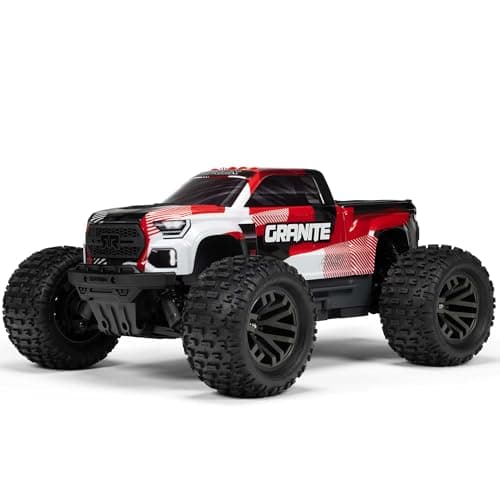 ARRMA Granite 223S 4x4Brushless power in a monster truck built to be crashed — the most common recommendation for a first serious basher. | Best brushless starter | 8.8 | $339.74View on Amazon #ad — how we earn · price as of November 12, 2026 |
| 2 | 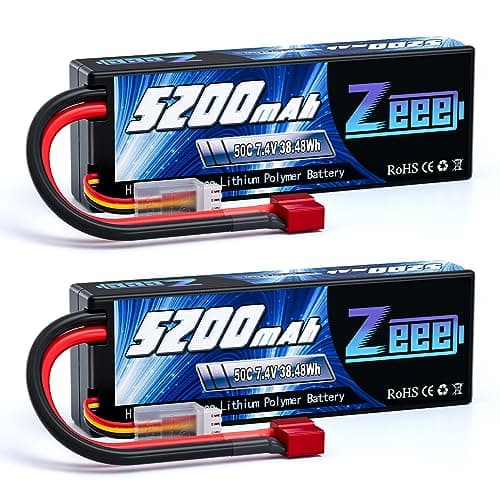 Zeee 2S LiPo batterySold in twos for about what one premium pack costs — the reason so many garages have a stack of them. | Two packs, low spend | 8.1 | $35.08$38.98(10% off)View on Amazon #ad — how we earn · price as of November 12, 2026 |
| 3 | 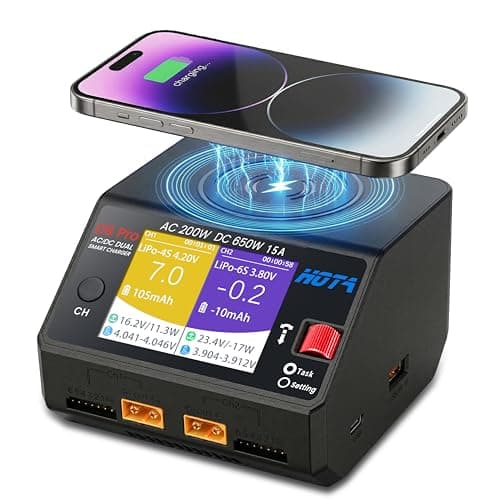 HOTA D6 Pro chargerTwo channels, plugs straight into the wall, and fast enough that charging stops being the bottleneck. | The one to buy once | 8.8 | $109.99$119.99(8% off)View on Amazon #ad — how we earn · price as of November 12, 2026 |
| 4 | 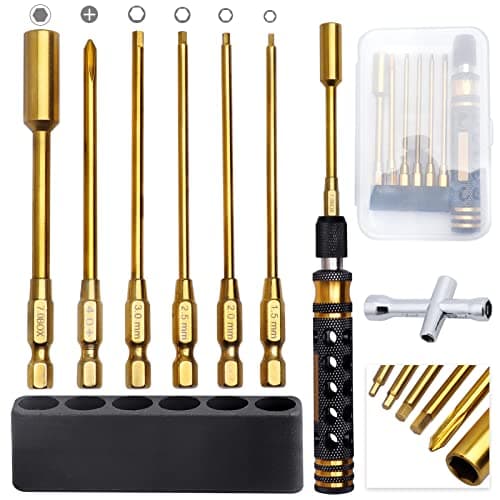 HobbyPark 6-in-1 RC driver setThe L-shaped keys in the box round off after a few uses. A proper driver set is the first upgrade nobody thinks of. | Fixing it yourself | 8.3 | $25.97View on Amazon #ad — how we earn · price as of November 12, 2026 |
Product photo via Amazon.
#1 · Best brushless starter
ARRMA Granite 223S 4x4
Brushless power in a monster truck built to be crashed — the most common recommendation for a first serious basher.
8.8/10our score for this use
Arrma designs for bashing: heavy-duty plastic, chunky driveshafts, and a reputation for surviving impacts that break lighter cars. The 223S is the current brushless version of its 1/10 monster truck and takes a 2S or 3S battery.
- Size:
- 1/10
- Drive:
- 4WD
- Motor:
- brushless motor
What it does well
- Built heavy on purpose — the brand's whole identity is surviving bad landings
- Brushless power with a 3S option, so it has room to grow with the driver
- Supported through Horizon Hobby, so parts and service have a real distribution network
What it does badly
- The weight that makes it tough also makes it hard on whatever it hits
- Battery and charger are extra on most versions
- Too fast for a young child without adult supervision
Specifications from ARRMA's current releases.
#ad — how we earn · price as of November 12, 2026
Product photo via Amazon.
#2 · Two packs, low spend
Zeee 2S LiPo battery
Sold in twos for about what one premium pack costs — the reason so many garages have a stack of them.
8.1/10our score for this use
The budget end of the LiPo market, usually sold as a two-pack. For a gift where the goal is more driving time rather than maximum performance, two adequate batteries beat one excellent one.
What it does well
- Two-packs at a price that makes a spare battery an easy decision
- Perfectly adequate for bashing, which is what most of these cars do
- Widely stocked in the common sizes
What it does badly
- Pack-to-pack consistency is not at the level of the premium brands
- They tend to age faster if they are stored fully charged — which beginners do
- Not the choice for racing
#ad — how we earn · price as of November 12, 2026
Product photo via Amazon.
#3 · The one to buy once
HOTA D6 Pro charger
Two channels, plugs straight into the wall, and fast enough that charging stops being the bottleneck.
8.8/10our score for this use
A balance charger looks after each cell inside a LiPo pack individually, which is what keeps the battery healthy and safe. The D6 Pro has a built-in power supply — no separate box to buy — charges two packs at once, and around 1.6A of balance current per cell, which is why it finishes noticeably faster than the pocket chargers.
What it does well
- Built-in AC power supply: it works straight out of the box with no extra purchase
- Two independent channels, so a second pack charges while the first is in the car
- Higher balance current than the small chargers, so charging is genuinely quicker
What it does badly
- Overkill if there is only ever going to be one small battery
- The menu system takes an evening to learn
- It is another box on the bench with its own fan noise
#ad — how we earn · price as of November 12, 2026
Product photo via Amazon.
#4 · Fixing it yourself
HobbyPark 6-in-1 RC driver set
The L-shaped keys in the box round off after a few uses. A proper driver set is the first upgrade nobody thinks of.
8.3/10our score for this use
Hobby-grade cars are held together with small hex screws and nuts, and the folded metal keys included in the box are made down to a price. This set is one magnetic aluminum handle plus 1.5, 2.0, 2.5 and 3.0mm hex bits, a 7mm nut driver, a Phillips bit and a small wheel wrench — HobbyPark lists titanium-machined alloy steel bits over 60 hardness, and names Traxxas, Arrma, Axial, Losi, Redcat, HPI and HSP as fits.
What it does well
- Makes repairs quick enough that they actually get done instead of shelving the car
- Hardened bits, so screw heads stop being rounded off by a badly fitting key
- The four hex sizes and the 7mm nut driver cover every brand on this site
What it does badly
- Not an exciting thing to unwrap on its own
- A single handle means swapping bits rather than picking up the next driver
- No metric nut sizes beyond 7mm, so a big 1/8 truck may want one more driver
#ad — how we earn · price as of November 12, 2026
How it compares inside its own class
The Granite's closest rival is the Traxxas Stampede 4X4, and the two are genuinely close: both are 1/10 brushless monster trucks, both have excellent parts networks, both are tall and both roll easily. The Traxxas advantage is distribution depth and self-righting, which flips the truck back over from the transmitter instead of a walk across the field. The ARRMA advantage is the throttle limiting and a chassis designed around impact from the start. We have put the pair side by side on ARRMA vs Traxxas.
Within ARRMA's own range, the Granite sits below the Big Rock 223S — same running gear, taller tires and a bigger body — and below the Vorteks 223S, which is the same platform in a lower, faster stadium-truck shape. The Granite is the middle answer and the most generally useful of the three. ARRMA Vorteks vs Granite covers the choice between the two, and the best ARRMA RC cars ranks the whole range.
Against the cheaper end of the market the comparison is less close than the specifications suggest. A sub-$200 truck can claim similar speed, and some genuinely reach it; what none of them have is a distribution network, a factory throttle limiter adjusted from the transmitter, and metal-geared waterproof electronics. That is what the extra money buys, and whether it is worth it depends entirely on whether the truck will be kept and repaired. Hobby grade vs toy grade and how much an RC car costs work through that honestly.
The short version
- Buy it if: you want one brushless truck that scales from beginner to confident, you have open space, and you accept a battery and charger as part of the purchase.
- Skip it if: it has to work out of the box, the driver is young, or the driving will be on pavement or indoors.
- Start on: a 2-cell LiPo and the 50 percent throttle setting. Both are reversible decisions; a broken front end is not.
- Buy alongside: a LiPo-capable charger, a spare pack, and a proper hex driver set — the folded keys round off.
- Expect to replace: a front suspension arm and a bumper in the first couple of months. Both are inexpensive and numbered.
How we assessed this
By reading ARRMA's own published specification for ARA4302V4 — motor, ESC and receiver, transmitter and its throttle limiting, servo, differentials, chassis, dimensions, wheelbase, weight, battery connector, both stated top speeds, and the in-the-box and needed-to-complete lists — and assessing it against what decides long-term satisfaction with a 1/10 basher: whether the power can be limited, what it costs to get running, how the shape suits the ground it will be driven on, and whether parts can be had quickly. Every figure above comes from that page, retrieved on 2026-10-23 and linked in Sources. ARRMA publishes no age guidance for this model, so we have not stated one, and where a figure is not published we have left it out rather than estimated it. We do not test these products first-hand and we publish no ratings, test scores or awards based on testing; our methodology page explains exactly what that means. Prices are never written into our copy: every figure shown is read from Amazon that day and rendered inside the buy button, with the date it was read.