By surface
The best RC cars for pavement
If the only ground you have is a driveway, a car park or a quiet street, half the RC market is the wrong purchase. Knobbly off-road tires on asphalt give you noise, wear and very little grip. These are the cars built for hard surfaces.
By Ryder M. · Published October 10, 2026 · Last reviewed
Shock & Servo is reader-supported. If you buy through a link on this page we may earn a commission, at no extra cost to you. It never changes which products we pick or the order we rank them in — the full rules are on our methodology page and our affiliate disclosure.
The best RC car for pavement is the [Traxxas Ford Fiesta ST Rally](#traxxas-fiesta-rally), because a rally car is the one category designed to work on hard surfaces and loose ones without being bad at either: it is low, it is full-time four-wheel drive, and it is twenty-one inches of 1/10 car that holds a line on asphalt instead of bouncing across it. The [LaTrax Rally](#latrax-rally) is the smaller, cheaper version of the same idea and arrives with a battery and a charger in the box. If the appeal is sliding rather than gripping, the [MST RMX 2.5](#mst-rmx-25-rtr) is a purpose-built drift car and pavement is the only place it works at all.
Short version: buy a rally car. The Fiesta ST Rally is the pick for a driveway, a car park or a cul-de-sac, the LaTrax Rally is the complete-in-box choice for a first car or a smaller space, and the HYPER GO 16207 is the speed-per-dollar option. Choose a drift car only if sliding sideways on purpose is the actual goal — they have almost no grip by design.
Why off-road tires are the problem
Nearly every RC car sold is an off-road vehicle, and the reason is that dirt, grass and gravel forgive mistakes while asphalt does not. The giveaway is the tires: big spaced lugs designed to dig into loose ground. On pavement there is nothing to dig into, so only the tips of the lugs touch the surface. The car becomes loud, slides when you do not want it to, understeers into things, and chews through rubber at a rate that surprises people. None of that is a fault — it is a tool being used on the wrong material.
Hard-surface cars solve it with a lower profile tire, a much fuller contact patch, a lower center of gravity and suspension tuned for grip instead of travel. The category that does it best for general use is rally: a rally car has a road car's low body and tire profile with enough suspension and four-wheel drive to still handle gravel, a wet patch or the lip where the driveway meets the street. That combination is exactly what somebody with only pavement available actually needs.
How we ranked them
- Does it grip on a hard surface? Tire profile and contact patch decide this, and they outrank power by a wide margin on asphalt.
- Is it stable at speed? A low center of gravity stops a car tripping over itself in a corner, which is the main way pavement runs end badly.
- Will it survive a curb? Pavement means edges, drains and expansion joints. Ground clearance and suspension travel still matter here, just less than off road.
- Can it handle a mixed surface? Almost nobody has pure asphalt. The cars that also cope with a gravel patch or a damp morning score higher.
- Is it complete in the box? A car that needs a battery and a charger before it can move is two purchases away from working.
- Honest cons on every pick. Every card below states real downsides — the drift cars in particular are specialist tools, not all-rounders.
The picks
| # | Product | Best for | Score | Price |
|---|---|---|---|---|
| 1 | 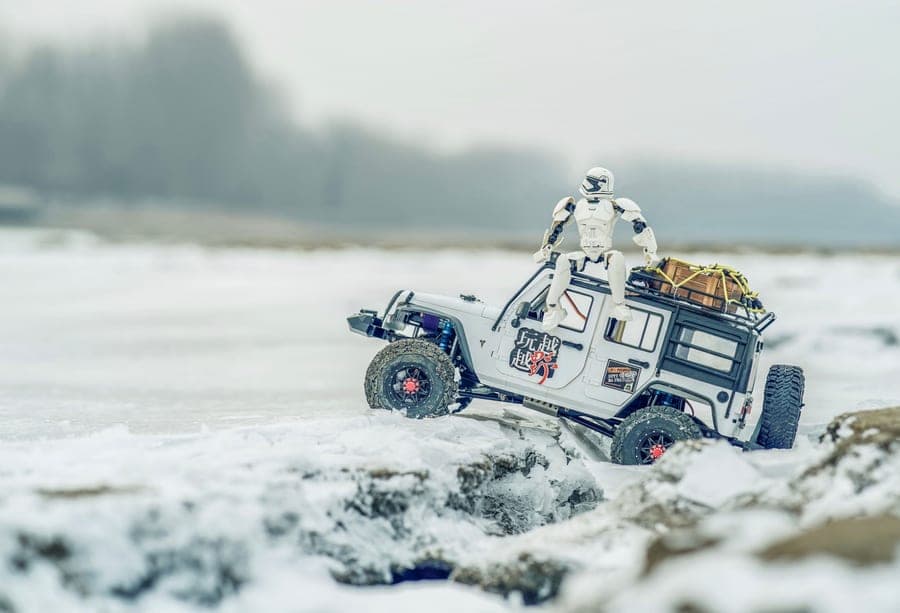 Traxxas Ford Fiesta ST RallyA licensed rally car that is genuinely happy on gravel, grass, snow and asphalt — the most versatile shape here. | All-surface driving | 8.7 | |
| 2 | 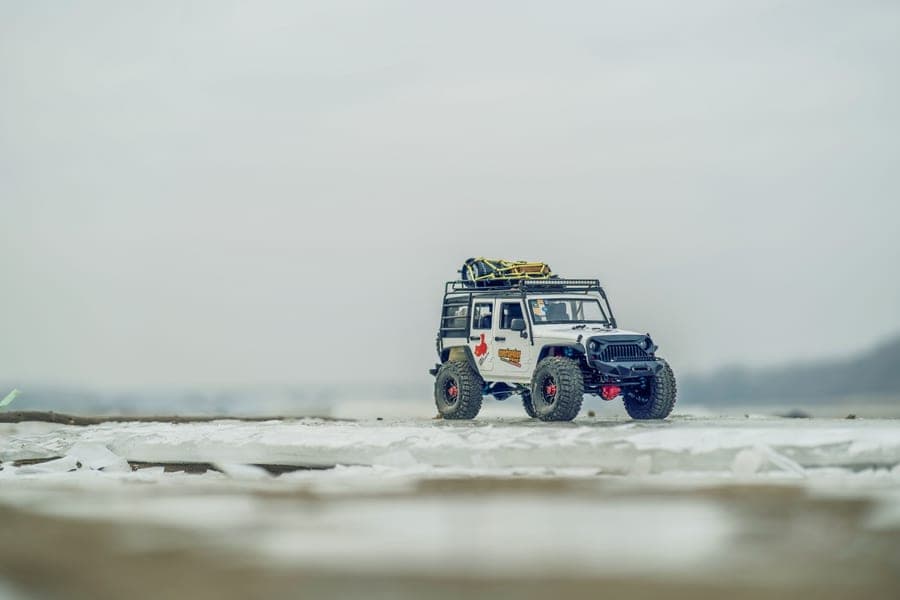 Traxxas LaTrax RallyWaterproof, four-wheel drive, and it comes with a battery and a charger — the friendliest way into the real hobby. | A family's first hobby car | 8.8 | |
| 3 | 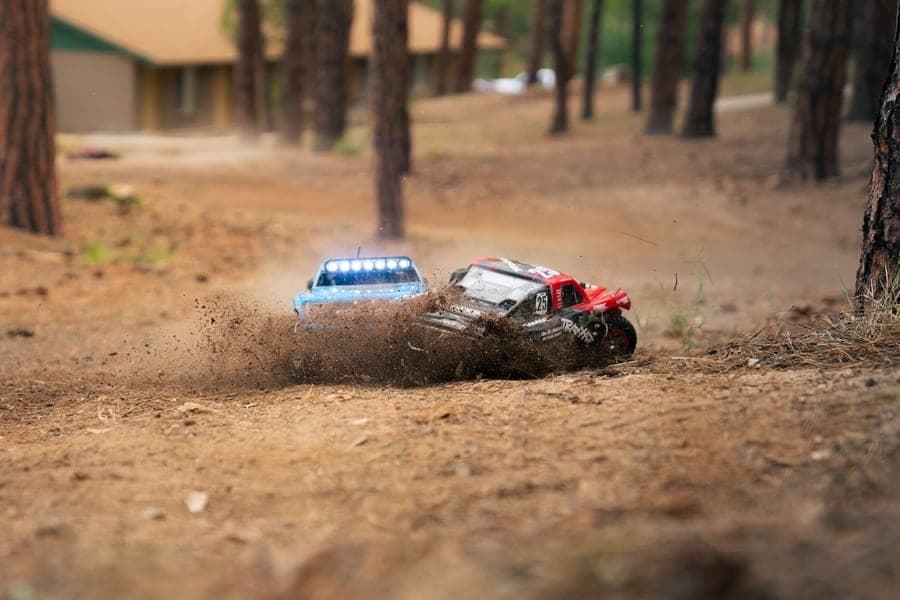 MJX HYPER GO 16207A brushless motor at a price that normally buys a brushed one — very fast, and more car than a young child should have. | Most speed per dollar | 8.4 | |
| 4 | MST RMX 2.5 RTRA purpose-built rear-wheel-drive drift car that arrives assembled, balanced and with a gyro already fitted. | Real drifting | 8.3 | |
| 5 |  Redcat RDSA ready-to-run rear-wheel-drive drift platform that undercuts the specialist brands. | Cheaper way into drift | 8.0 |
Illustrative photo — not this exact model.
#1 · All-surface driving
Traxxas Ford Fiesta ST Rally
A licensed rally car that is genuinely happy on gravel, grass, snow and asphalt — the most versatile shape here.
8.7/10our score for this use
Rally cars are built to be fast on surfaces that change. Traxxas gives this one full-time four-wheel drive, a low center-of-gravity chassis, oil-filled shocks, rally tires, a Titan 550 brushed motor and waterproof electronics, and quotes up to 35 minutes of running on an optional 5800mAh 2S LiPo.
- Size:
- 1/10 (21 inches long)
- Drive:
- Full-time 4WD
- Motor:
- brushed motor
What it does well
- Equally at home on a driveway, a gravel path and a snowy yard — few RC cars are
- Waterproof electronics for all-weather use
- Long run times on a big battery: up to 35 minutes by Traxxas' own figure
What it does badly
- The low body catches on thick grass and deep ruts
- Requires a battery and charger, which are not included
- Brushed power: it is quick, not fast, next to the brushless trucks
Specifications from the Fiesta ST Rally listing and manual.
Illustrative photo — not this exact model.
#2 · A family's first hobby car
Traxxas LaTrax Rally
Waterproof, four-wheel drive, and it comes with a battery and a charger — the friendliest way into the real hobby.
8.8/10our score for this use
A 1/18 rally car from Traxxas, meaning it is about half the size of the trucks you see at a track but built by a company with parts in real hobby shops. Traxxas lists waterproof all-weather electronics, a 6-volt NiMH battery and a wall charger in the box, and a speed control with drive profiles that include a training mode.
- Size:
- 1/18
- Drive:
- Shaft-driven 4WD
- Motor:
- brushed motor
What it does well
- Battery and charger are included, so the gift works the day it is opened
- Waterproof electronics — wet grass and puddles are genuinely fine
- A training mode that limits the power, then full power later, so the car grows with the driver
- Traxxas parts are stocked by hobby shops and easy to order
What it does badly
- The NiMH battery it ships with is slower and heavier than a LiPo, so the first upgrade is obvious
- Low-slung rally body grounds out on thick grass — it prefers gravel, dirt and pavement
- Costs noticeably more than the toy-grade cars it sits beside on a search results page
Specifications from the Traxxas LaTrax Rally product page.
Illustrative photo — not this exact model.
#3 · Most speed per dollar
MJX HYPER GO 16207
A brushless motor at a price that normally buys a brushed one — very fast, and more car than a young child should have.
8.4/10our score for this use
Brushless means the motor has no wearing carbon brushes inside: more power, less maintenance, and a much higher price historically. MJX put one in a 1/16 truck and quotes 62 km/h — around 38 mph — on a 3S battery, with metal gears and metal-bodied shock absorbers.
- Size:
- 1/16
- Drive:
- 4WD
- Motor:
- brushless motor
What it does well
- Brushless power and metal drivetrain parts at a price that used to buy neither
- Genuinely fast — this is the one that impresses a teenager
- Metal-bodied oil shocks rather than the plastic friction dampers at this price point
What it does badly
- Too fast for a young child. Below about twelve it is frustrating rather than fun
- Parts come through MJX sellers, not a hobby-shop shelf — a broken part can mean a wait
- Speed and light weight are a bad combination on hard surfaces; it breaks front suspension arms
Specifications from MJX's HYPER GO product page.
Illustrative photo — not this exact model.
#4 · Real drifting
MST RMX 2.5 RTR
A purpose-built rear-wheel-drive drift car that arrives assembled, balanced and with a gyro already fitted.
8.3/10our score for this use
Drifting is deliberately sliding the car sideways through a corner. A gyro is a small electronic stabilizer that counter-steers faster than a human can, which is what makes a rear-wheel-drive drift car learnable rather than infuriating. MST builds the RMX from the ground up as a drift chassis rather than converting a touring car.
- Size:
- 1/10
- Drive:
- 2WD (rear)
- Motor:
- brushed motor
What it does well
- Designed as a drift car, not adapted from something else — the geometry is right out of the box
- Gyro included in the ready-to-run package, which is the difference between learning and giving up
- Brushed and brushless versions exist, so you can start calm and move up
What it does badly
- Smooth flat surfaces only: it is useless on grass, gravel or a bumpy driveway
- Drifting takes real practice. A child expecting instant results will be frustrated
- The hard plastic drift tires wear down and are a consumable
Specifications from MST's own RMX 2.5 RTR page.
Illustrative photo — not this exact model.
#5 · Cheaper way into drift
Redcat RDS
A ready-to-run rear-wheel-drive drift platform that undercuts the specialist brands.
8.0/10our score for this use
Redcat's competition-style drift chassis, sold ready to run. It is the usual Redcat proposition: a specification that normally costs more, backed by the company's own parts catalog rather than a hobby-shop shelf.
- Size:
- 1/10
- Drive:
- 2WD (rear)
- Motor:
- brushless motor
What it does well
- Real adjustable drift geometry at a lower price than the specialist brands
- Redcat stocks its own spares, so consumables are easy to reorder
- A good platform to modify as skills improve
What it does badly
- Smooth surfaces only, like every drift car
- Setup matters, and a beginner will spend time learning what each adjustment does
- Less local parts availability than the big two brands
Specifications from Redcat's product and parts catalog.
Rally versus drift, which is a bigger difference than it sounds
Both categories live on hard surfaces, and they want opposite things. A rally car wants maximum grip: four-wheel drive, a tire that bites, a chassis that holds its line. A drift car wants deliberately minimal rear grip, rear-wheel drive and steering geometry that lets the car sit at an angle under control. Driving a drift car when you wanted a fast car is a disappointment, and driving a rally car when you wanted to drift is simply impossible.
The practical test is what the driver pictures. If they imagine going quickly between two points, buy the rally car. If they imagine the car sideways through a corner with the back end out, buy the drift car and expect a learning curve — drifting takes practice in a way that pointing a four-wheel-drive car at a gap does not. The best RC drift cars covers that side properly, and the best RC rally cars covers this one.
Where you can actually drive
An empty car park on a Sunday is the ideal surface for most of these cars: smooth, large, and free of the obstacles that make a driveway frustrating. A tennis or basketball court is better still if you can use one, though loose grit will mark the surface, so ask first. A quiet cul-de-sac works, with the obvious caveat that a car which is invisible to a reversing driver is a car that gets flattened. Where to drive RC cars covers the realistic options and the etiquette that keeps them available.
One thing worth knowing before the first run: hard surfaces make RC cars sound much faster and more aggressive than they are, because there is no soft ground to absorb the noise. That is part of the appeal on a bash spot and a genuine nuisance at eight in the morning outside a neighbor's bedroom window. The small 1/18 cars are substantially quieter than the 1/10 ones, which is a real point in the LaTrax's favor in a built-up area.
Which one to buy
- A driveway, a car park or a quiet street, one car for everything: the Ford Fiesta ST Rally. Four-wheel drive, low, and genuinely all-surface.
- A first car, or a smaller space: the LaTrax Rally — the same rally idea at 1/18, with a battery and a wall charger in the box.
- Maximum speed per dollar: the HYPER GO 16207, with the caveat that spares are mail order.
- Sliding sideways on purpose: the MST RMX 2.5, or the Redcat RDS for a cheaper route into the same thing.
- A rough driveway with broken edges and gravel: reconsider — the best RC cars for grass and the monster trucks handle that better.
- Indoors because outside is not an option: the best indoor RC cars is the right page.
What to buy alongside
A spare set of tires, earlier than you would expect — asphalt wears rubber away steadily and worn tires turn a precise car into a vague one. A second battery next, for the usual reason: twenty minutes of driving and an hour of charging is the ratio that puts cars on shelves. On the Fiesta and the drift cars a battery and a charger are required purchases rather than optional ones, and the best RC battery chargers covers buying one that will still be right in two years. Then hex drivers, since every repair is on the hard-surface side of the parts bill.
How we assessed this
By starting from the surface rather than the specification: we ranked these cars on tire profile, center of gravity and drivetrain, because those three things decide whether a car works on asphalt, and power does not. Every specification quoted above is from the manufacturer's own product page, linked in Sources on each card and in the list below; nothing has been estimated. No price figures appear anywhere on this site. We do not test these products first-hand, and our methodology page explains what that means for a surface-based roundup.