Before you buy
How far can RC cars go?
There are two different answers and people usually want the second one. Radio range is how far the car can be from you; distance on a charge is how far it can actually travel. The second is almost always the real limit.
By Ryder M. · Published October 6, 2026 · Last reviewed
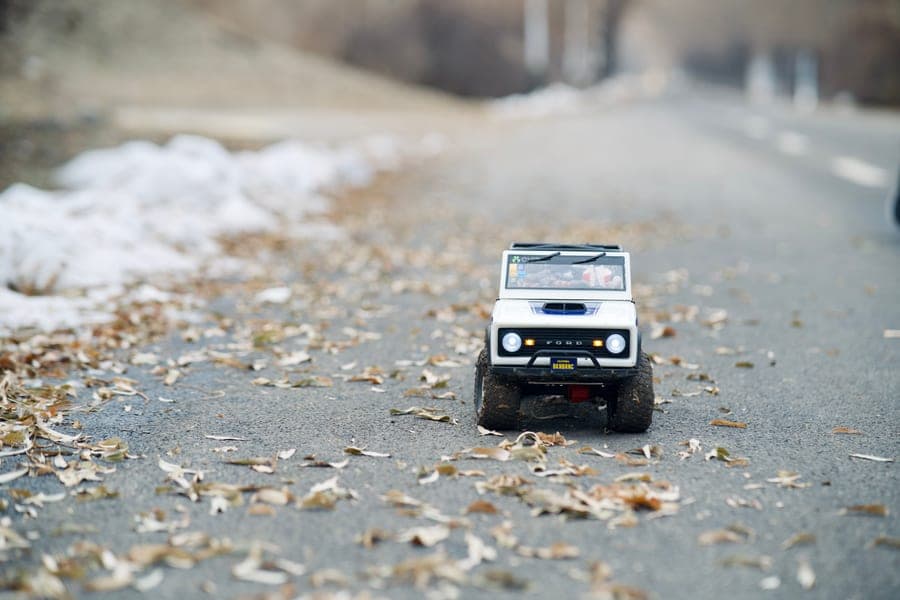
Shock & Servo is reader-supported. If you buy through a link on this page we may earn a commission, at no extra cost to you. It never changes which products we pick or the order we rank them in — the full rules are on our methodology page and our affiliate disclosure.
Two different limits answer this question. Radio range — how far the car can be from the transmitter before it stops responding — is typically 100 to 300 feet on a toy-grade car and considerably more on a hobby-grade 2.4GHz system, often further than you can usefully see the car. DEERC, for example, states 165 feet of radio range for its camera truck. Distance on a charge is the other limit: at a realistic average speed, a 15 to 30 minute run time works out at a couple of miles of actual driving. In practice the limit you hit is neither of those. It is your eyesight.
Short version: radio range on a hobby-grade car exceeds the distance at which you can see which way the car is pointing, so range is rarely the real constraint. Run time is: 15 to 30 minutes per pack. A second battery is the only upgrade that changes the answer.
The three limits, compared
| Limit | Typical figure | What sets it | Do you hit it? |
|---|---|---|---|
| Radio range, toy-grade | 100-300 feet | Transmitter power, antenna quality | Sometimes, in a large park |
| Radio range, hobby-grade 2.4GHz | Well beyond visual range | Antenna routing and line of sight | Rarely |
| Wifi video range, camera cars | About 100 feet | The car's own wifi, not the radio | Yes, well before the radio fades |
| Run time per battery | 15-30 minutes | Pack capacity, speed, surface | Always — this is the real one |
| Visual range | About 150-250 feet | Your eyes and the car's size | Always, and first |
What actually limits radio range
Modern RC cars use 2.4GHz radio, which brought two changes: it is immune to the frequency clashes that used to make two cars in one park impossible, and it is line-of-sight. That second point is the one that matters in practice. Put a building, a car or a thick hedge between you and the vehicle and the range drops sharply. Keep the car in sight and the range is generous. The other common cause of poor range is mundane — a receiver antenna that has been cut, crushed under the body, or coiled up inside the chassis instead of routed upright in its tube.
- Antenna routing. The receiver antenna should be as vertical and as high as the body allows, in its plastic tube, uncut. This is the most common cause of mysteriously short range.
- Transmitter batteries. Weak cells in the controller reduce range before they do anything else — the car becomes twitchy and drops out at twenty feet.
- Line of sight. 2.4GHz does not go round corners well. A hedge costs more range than distance does.
- Interference. Far less of a problem than on the old frequencies, but a dense crowd of wifi and other 2.4GHz devices still has an effect.
- Failsafe behavior. A good system stops the car when it loses signal rather than leaving it at the last throttle setting. Check what yours does before testing the limit.
Camera cars are a special case
On a car with a wifi camera there are two independent links, and they do not have the same range. DEERC lists 165 feet of radio range and about 100 feet of wifi range on the DE36W, which means the picture drops out well before control does — a deliberate and sensible order, because the alternative is a car you can see and cannot steer. The practical consequence is that camera cars should be driven by eye with the screen as a bonus, not driven by screen. The video also lags reality by a fraction of a second, which is enough to crash on. The best RC cars with a camera covers that trade in detail.
How far can it actually travel?
This is the question most people mean. Take a 20-minute run time and an honest average speed of perhaps 8 to 10 mph — bashing is not a steady cruise, it is bursts of throttle and a lot of stopping — and you get roughly 3 miles of ground covered per pack. On a crawler that figure collapses, because crawling happens at walking pace; a 1/18 crawler with a 750mAh pack might cover a few hundred yards in a long, satisfying session. Neither number is a specification any manufacturer publishes, and both depend heavily on surface, speed and how the car is driven. How long RC car batteries last sets out the run-time side properly.
The upgrade that changes the answer
| # | Product | Best for | Score | Price |
|---|---|---|---|---|
| 1 | 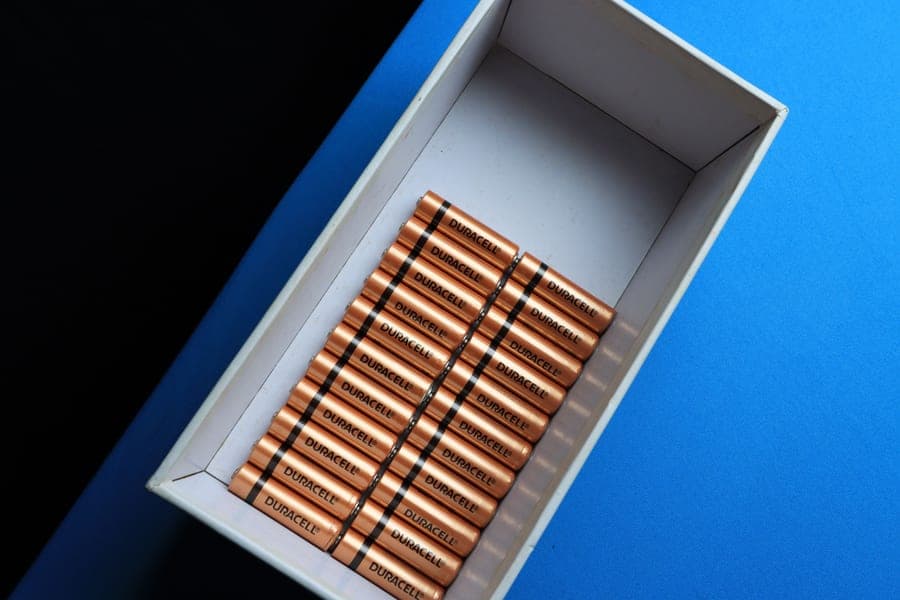 Gens Ace 2S LiPo batteryThe brand most people settle on once they have been burned by a cheap pack that puffed after a month. | The reliable default | 8.7 | |
| 2 | Zeee 2S LiPo batterySold in twos for about what one premium pack costs — the reason so many garages have a stack of them. | Two packs, low spend | 8.1 | |
| 3 | 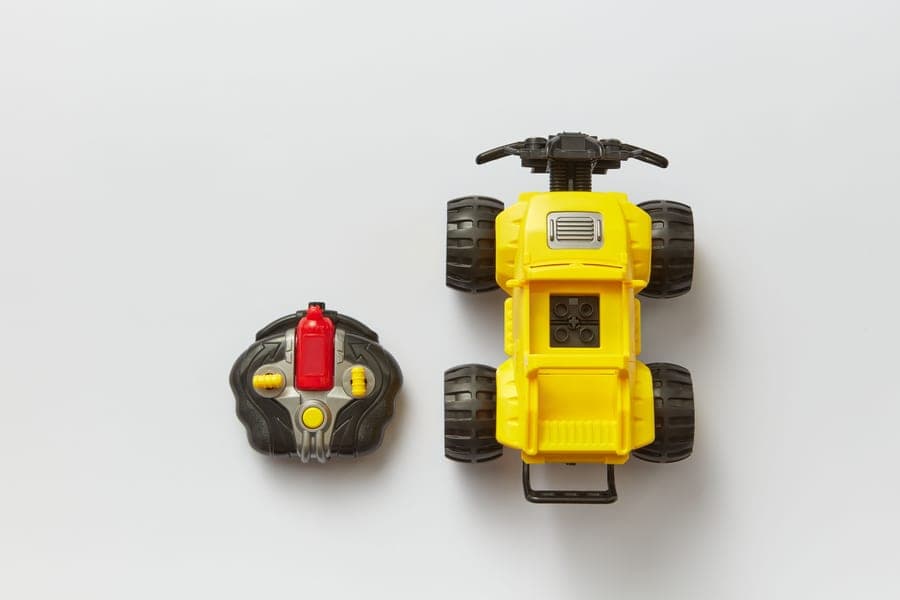 DEERC DE36WA 1/16 truck with a 1080p wifi camera on the roof and a phone app that shows what it sees. | A camera on a budget | 7.6 |
Illustrative photo — not this exact model.
#1 · The reliable default
Gens Ace 2S LiPo battery
The brand most people settle on once they have been burned by a cheap pack that puffed after a month.
8.7/10our score for this use
LiPo is the standard rechargeable battery chemistry for RC cars: lighter than the older NiMH type and it holds its power right up to the end of the run rather than gradually fading. 2S means two cells — the size most 1/10 cars take.
What it does well
- Consistent pack-to-pack quality, which is the whole argument for paying more for a battery
- Holds voltage under load, so the car feels the same on lap ten as on lap one
- Sold in all the common connector types and sizes
What it does badly
- Costs more than the budget brands for capacity you can measure but may not notice
- Like all LiPo packs it must be stored at partial charge, not full, or it degrades
- Needs a balance charger — it cannot be charged with the wall plug from a toy car
Illustrative photo — not this exact model.
#2 · Two packs, low spend
Zeee 2S LiPo battery
Sold in twos for about what one premium pack costs — the reason so many garages have a stack of them.
8.1/10our score for this use
The budget end of the LiPo market, usually sold as a two-pack. For a gift where the goal is more driving time rather than maximum performance, two adequate batteries beat one excellent one.
What it does well
- Two-packs at a price that makes a spare battery an easy decision
- Perfectly adequate for bashing, which is what most of these cars do
- Widely stocked in the common sizes
What it does badly
- Pack-to-pack consistency is not at the level of the premium brands
- They tend to age faster if they are stored fully charged — which beginners do
- Not the choice for racing
Illustrative photo — not this exact model.
#3 · A camera on a budget
DEERC DE36W
A 1/16 truck with a 1080p wifi camera on the roof and a phone app that shows what it sees.
7.6/10our score for this use
The camera streams over its own wifi to a phone, which acts as the screen — you drive with the normal radio and watch the picture on the phone beside it. DEERC lists 1080p, a 45-degree adjustable camera angle, 165 feet of radio range, 100 feet of wifi range, and two batteries for about 60 minutes of driving.
- Size:
- 1/16
- Drive:
- 4WD
- Motor:
- toy-grade motor
What it does well
- Two batteries included, which roughly doubles the useful life of an afternoon
- The 45-degree adjustable mount means you can aim the camera at the ground or the horizon
- Radio range comfortably exceeds the wifi range, so you never lose control before you lose the picture
What it does badly
- Wifi video lags behind reality by a fraction of a second — enough that you crash if you drive by screen alone
- Toy-grade: the camera and the body are not repairable in the way a hobby-grade car is
- The picture drops out at around 100 feet, well before the car is out of radio range
Specifications from the DEERC DE36W listing.
What space do you actually need?
Less than range figures suggest, and more than most people have. A 1/10 truck at 30 mph wants something the size of a soccer field to be enjoyable; at 55 mph, as on the trucks on our 100 mph page, it wants more. A 1/18 crawler is content with a flowerbed and a 1/24 crawler with a bookshelf. Matching the car to the space available is the single most reliable way to make sure it gets used — which is the argument behind the best mini RC cars and the best indoor RC cars.
How we assessed this
The range figures quoted for specific products are the manufacturers' own, linked in Sources. The distance-per-charge figures are presented as arithmetic from typical run times and honest average speeds, with their assumptions stated, because no manufacturer publishes a distance figure and we have not measured one. We do not test these products first-hand — our methodology page explains what that means.