By shape
The best RC buggies
Low, wide and open-wheeled. A buggy is the shape that corners properly, rarely flips, and tells the driver immediately when they were clumsy — which is either the point or the problem, depending on who is driving.
By Ryder M. · Published October 6, 2026 · Last reviewed
Shock & Servo is reader-supported. If you buy through a link on this page we may earn a commission, at no extra cost to you. It never changes which products we pick or the order we rank them in — the full rules are on our methodology page and our affiliate disclosure.
The best RC buggy for most buyers is the ARRMA Typhon Grom 223S — a scaled-down version of ARRMA's full-size Typhon, built deliberately for younger and newer drivers, with the brand's durability and parts support intact. A buggy is the low, wide, open-wheel off-road shape used in real off-road racing: the wheels sit outside the bodywork, the center of gravity is close to the ground, and the whole car is lighter than a truck of the same scale. That combination makes it the best-cornering and least flip-prone shape in the hobby, and the worst at climbing over anything.
Short version: ARRMA Typhon Grom if the budget allows, because durability and parts matter more here than anything else. Traxxas Bandit XL-5 for the cheapest way into the best parts network in the hobby. Losi Mini-B to learn to drive properly, BEZGAR HM161 if the spend has to stay under a hundred dollars.
Buggy, monster truck or short course?
| Buggy | Monster truck | Short course truck | |
|---|---|---|---|
| Rollover tendency | Low — the flattest shape here | High, especially for a beginner | Moderate |
| Cornering | Best of the three | Rolls and understeers | Good, with body roll |
| Ground clearance | Lowest — long grass stops it | Highest | Middle |
| Crash tolerance | Exposed wheels and arms take the hit | Tall, so it lands badly | Best — the body covers the wheels |
| Weight | Lightest, so impacts do least damage | Heaviest | Middle |
| Visual impact | Looks like a racing car | Looks like what a child pictures | Looks like a race truck |
| Best for | Smooth dirt, tracks, learning control | Rough yards, jumps, bad ground | Mixed ground, beginners who crash |
Why a buggy is often the right beginner car
Because the single most demoralizing thing that happens to a new driver is the car landing on its roof every thirty seconds. A tall monster truck does that constantly for the first week — our monster truck roundup says so plainly on the picks themselves. A buggy mostly does not. It is low enough to take a hard corner flat, light enough that a crash into a curb bends very little, and cheap enough at the two-wheel-drive end that the first mistake is not expensive.
The counter-argument is grass. A buggy's wheels are small and its belly sits close to the ground, so anything longer than a mown lawn stops it dead. If the only available space is a rough back yard, the shape is wrong whatever the car, and the best RC cars for grass is the page you want instead.
What to look for
- 2WD or 4WD. A 2WD buggy is cheaper, lighter, simpler and teaches throttle discipline, because it spins its rear wheels the moment you are heavy-handed. A 4WD buggy flatters everyone. 2WD vs 4WD has the full argument.
- Brushed or brushless. Brushed is calmer and cheaper; brushless is faster and needs more respect. For a first buggy, brushed is rarely the wrong answer.
- Whether a battery is included. The Traxxas and ARRMA buggies ship without one; the budget cars include one or two. That gap is real money, and it decides whether the car can be driven on the day.
- Oil-filled shocks, not friction dampers. Oil shocks are what stop a light car skipping across bumps. Most cars above about $100 have them; below that, check.
- Parts availability. The exposed suspension arms on a buggy are the first thing to break. A car whose arms are stocked locally is worth paying for.
The four picks
| # | Product | Best for | Score | Price |
|---|---|---|---|---|
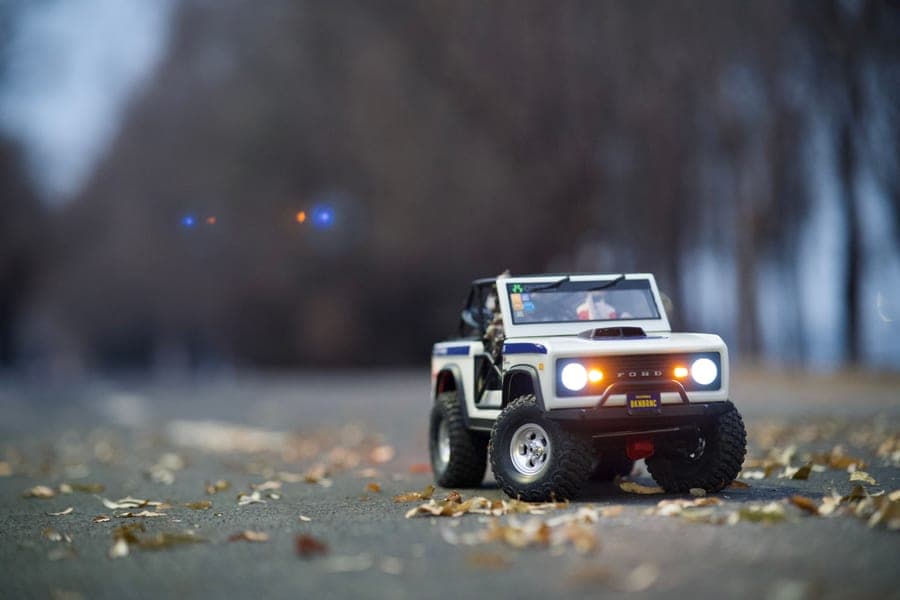
| 1 | ARRMA Typhon Grom 223SA scaled-down Arrma buggy — the same toughness in a size and speed a younger driver can actually manage. | Smaller hands, real power | 8.6 | |
| 2 | 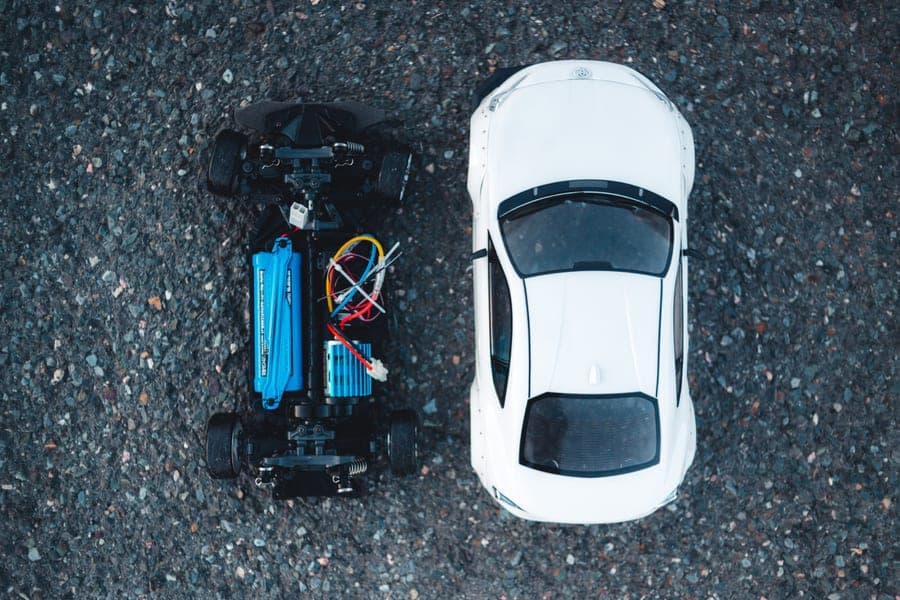 Traxxas Bandit XL-5The lowest, lightest car in the Traxxas 1/10 range, and the cheapest entry to that parts network. | Cheapest way into Traxxas | 8.3 | |
| 3 | 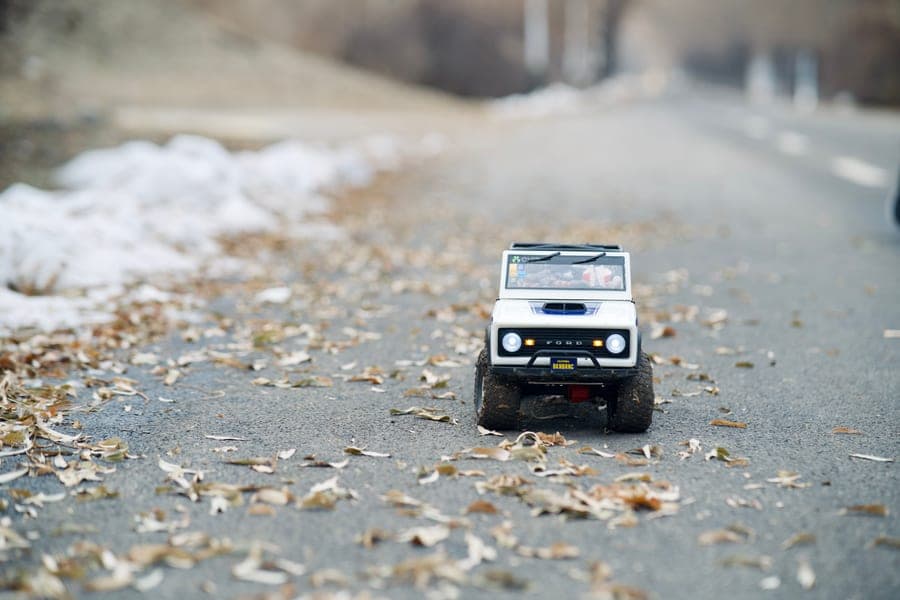 Losi Mini-BA small racing buggy that teaches real car control, because two-wheel drive punishes clumsy throttle. | Learning to drive properly | 8.1 | |
| 4 | 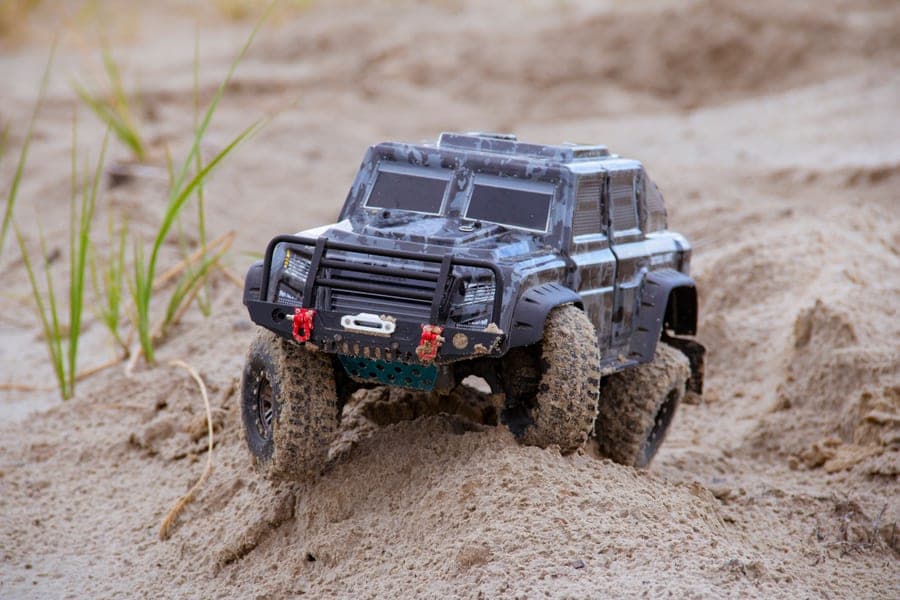 BEZGAR HM161BEZGAR calls it hobby-grade and, unusually at this price, largely means it — and two batteries come in the box. | Bridging toy to hobby | 8.2 |
Illustrative photo — not this exact model.
#1 · Smaller hands, real power
ARRMA Typhon Grom 223S
A scaled-down Arrma buggy — the same toughness in a size and speed a younger driver can actually manage.
8.6/10our score for this use
The Grom is a small-scale version of Arrma's Typhon buggy, made deliberately for younger and newer drivers: lower, lighter, cheaper, and still built on the brand's bash-it-and-see philosophy.
- Size:
- 1/18
- Drive:
- 4WD
- Motor:
- brushless motor
What it does well
- Arrma durability in a size that does not overwhelm a ten-year-old
- Low buggy shape means far fewer rollovers than the monster trucks
- Cheaper than the full-size Arrma models while keeping the parts support
What it does badly
- Still brushless and still fast — supervision matters for the first few runs
- Small wheels limit it on long grass
- Costs more than 1/18 cars from the budget brands
Specifications from ARRMA's current releases.
Illustrative photo — not this exact model.
#2 · Cheapest way into Traxxas
Traxxas Bandit XL-5
The lowest, lightest car in the Traxxas 1/10 range, and the cheapest entry to that parts network.
8.3/10our score for this use
A classic rear-motor two-wheel-drive buggy with a brushed XL-5 speed control. It gives up the all-wheel-drive grip of its siblings and, in exchange, costs less and is more forgiving of crashes because there is less of it to break.
- Size:
- 1/10
- Drive:
- 2WD
- Motor:
- brushed motor
What it does well
- The cheapest route into Traxxas parts availability and build quality
- Low and light: it survives crashes that bend taller trucks
- Two-wheel drive is simpler mechanically, so there is less to go wrong
What it does badly
- Two-wheel drive is hard work in wet grass or loose dirt
- Battery and charger are extra
- Less impressive to look at than a monster truck, which matters with younger children
Specifications from Traxxas' own XL-5 model comparison.
Illustrative photo — not this exact model.
#3 · Learning to drive properly
Losi Mini-B
A small racing buggy that teaches real car control, because two-wheel drive punishes clumsy throttle.
8.1/10our score for this use
A buggy is the low, wide, open-wheel shape used in off-road racing. The Mini-B is a small, light two-wheel-drive version — the kind of car that rewards smooth inputs and shows you immediately when you were heavy-handed.
- Size:
- 1/16
- Drive:
- 2WD
- Motor:
- brushed motor
What it does well
- Low and wide, so it barely rolls over — the opposite problem to a monster truck
- Teaches throttle and steering control better than a four-wheel-drive car that flatters everyone
- Light enough that crashes rarely break anything
What it does badly
- Two-wheel drive struggles in long grass and loose dirt
- Less immediately exciting than a big truck for a younger child
- Small wheels mean small obstacles stop it
Specifications from Losi's mini range.
Illustrative photo — not this exact model.
#4 · Bridging toy to hobby
BEZGAR HM161
BEZGAR calls it hobby-grade and, unusually at this price, largely means it — and two batteries come in the box.
8.2/10our score for this use
A 1:16 truck, so roughly the size of a shoebox. BEZGAR states a top speed above 40 km/h — around 25 mph — with four-wheel drive and a rechargeable pack, or two of them on the twin-battery version.
- Size:
- 1:16
- Drive:
- 4WD
- Motor:
- brushed motor
What it does well
- Real four-wheel drive and enough ground clearance for grass and gravel
- Twin-battery versions exist, which is the difference between a long afternoon and a short one
- BEZGAR sells replacement bodies and parts directly, which most toy brands do not
What it does badly
- Parts are BEZGAR-only — nothing sits on the shelf at a local hobby shop
- Quick enough to break things, and the plastic is not Traxxas plastic
- The steering servo is the usual weak point at this price
Specifications from BEZGAR's HM161 product page.
A note on racing buggies
Search for RC buggies and much of what comes back is 1/10 and 1/8 competition kits — unassembled rolling chassis sold without electronics, intended for club racing. They are excellent and they are not what this site recommends, because a kit is a project rather than a gift, and because the electronics, battery, charger and radio are all separate purchases on top. Everything on this page is ready to run. What does RTR mean explains the distinction and why it matters more than almost any specification.
How we assessed this
By what the shape is actually good at — cornering, crash tolerance and teaching control — and then by whether each car can be kept running. Specifications come from each manufacturer's own listing, linked in Sources. We do not test these products first-hand; our methodology page sets out exactly how the picks are made.