Before you buy
2WD vs 4WD RC cars
This is the first real fork in the road when buying an RC car, and the answer is not simply more drive is better. It depends on the ground it will be driven on.
By Ryder M. · Published October 4, 2026 · Last reviewed
Shock & Servo is reader-supported. If you buy through a link on this page we may earn a commission, at no extra cost to you. It never changes which products we pick or the order we rank them in — the full rules are on our methodology page and our affiliate disclosure.
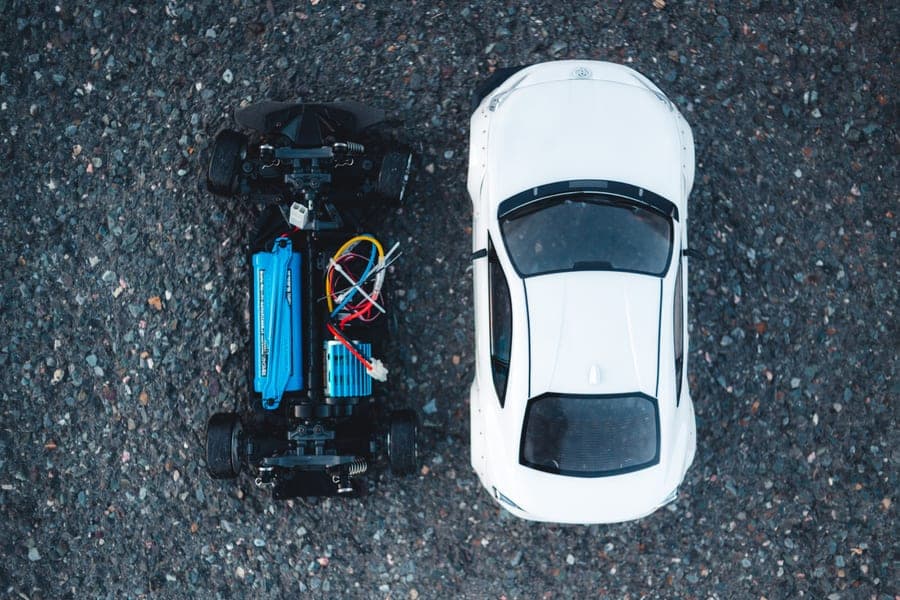
Buy four-wheel drive if the car will be driven on grass, dirt or anything loose, and if the driver is a beginner or a child. Buy two-wheel drive if it will mostly be driven on pavement or a smooth track, if the budget is tight, or if the point is learning to drive properly. On an RC car, 2WD means only the rear wheels are driven; 4WD means all four are, through a driveshaft running the length of the chassis.
Short version: 4WD for grass, dirt and beginners. 2WD for pavement, a smaller budget, and anyone who wants to learn car control. If you are buying a gift and do not know where it will be driven, choose 4WD — it is the more forgiving of the two in almost every situation.
The comparison table
| 2WD | 4WD | |
|---|---|---|
| Grip on loose ground | Spins up, slides, gets stuck in grass | Pulls through grass, dirt and gravel |
| Ease for a beginner | Punishes heavy throttle immediately | Flatters almost any input |
| Cost of the car | Lower — fewer driveline parts | Higher |
| Cost to run | Fewer parts to break or replace | More driveline parts, so more to go wrong |
| Weight | Lighter, which helps in a crash | Heavier, which hurts in one |
| Maintenance | Simpler; less to clean and grease | Front diff, center shaft and outdrives all need attention |
| What it teaches | Throttle and steering discipline | Speed, with less to learn first |
| Best surface | Pavement, carpet, hard-packed dirt | Grass, loose dirt, sand, snow |
What four-wheel drive actually gives you
Traction, and therefore forgiveness. With power going to all four wheels, the car accelerates without the rear end stepping out, climbs out of a rut instead of digging into it, and keeps moving through long grass where a two-wheel-drive car would sit and spin. For a beginner — and especially for a child — that means the car does what they expect it to do, which is the difference between a gift that gets used and one that gets abandoned.
The costs are real, though. A 4WD chassis has a front differential, a center driveshaft and a second set of outdrives, all of which are parts that can break and that need cleaning after a wet run. It is heavier, so impacts do more damage. And it is more expensive, both to buy and to repair.
What two-wheel drive gives you
Less car, for less money, with fewer things to go wrong. Mechanically a 2WD buggy or truck is simpler: no front diff, no center shaft, less to grease and less to replace. It is also lighter, which genuinely matters — a light car survives crashes that bend a heavy one, because there is less mass arriving at the obstacle.
The other argument for 2WD is the one experienced drivers make: it teaches you to drive. A 4WD car hides clumsy throttle work, while a 2WD car spins its rear wheels and swings sideways the moment you are heavy-handed. If the recipient wants to get good rather than just go fast, that feedback is the point rather than the problem.
One of each, at two price levels
| # | Product | Best for | Score | Price |
|---|---|---|---|---|
| 1 | 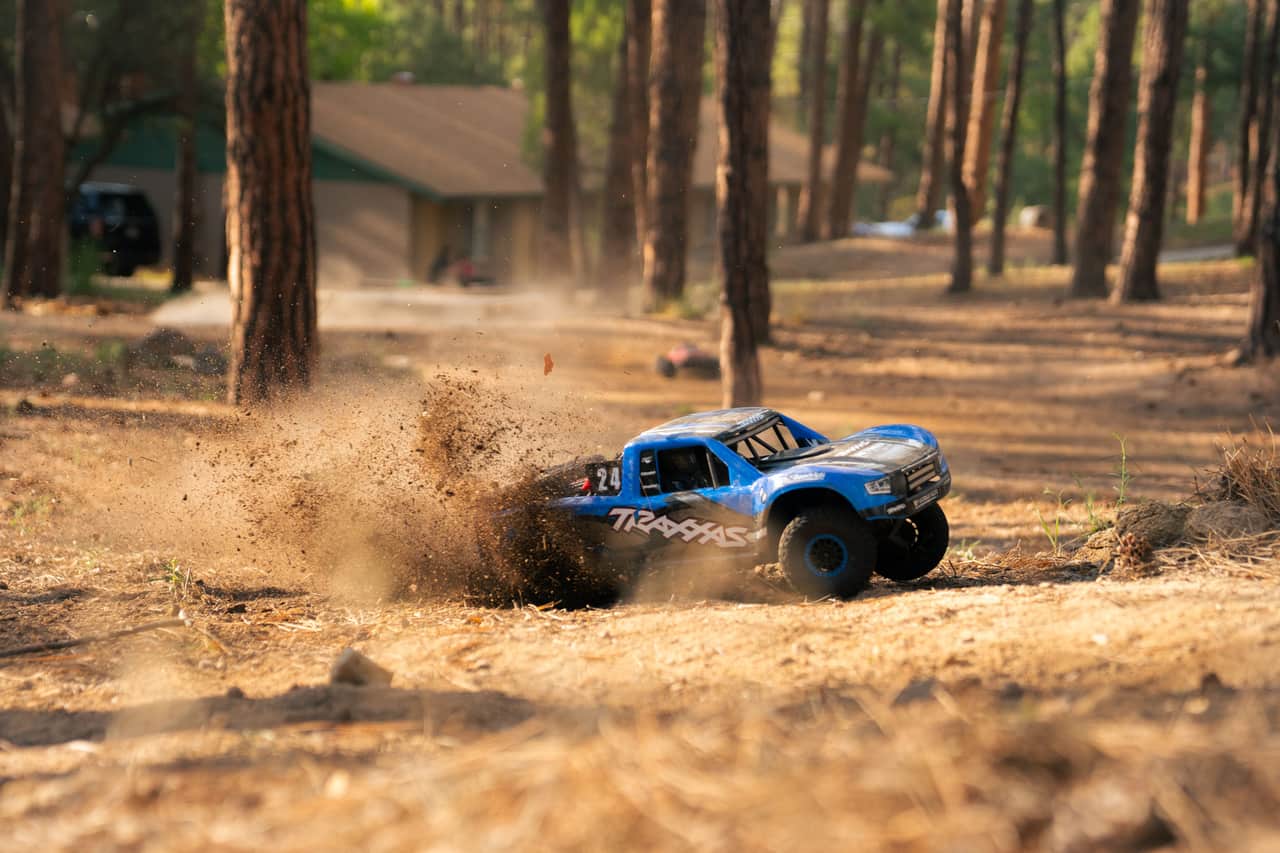 Traxxas Slash 4X4 BL-2sThe short-course truck that half the hobby owns, which is exactly why parts are never a problem. | The safest big gift | 9.1 | |
| 2 | 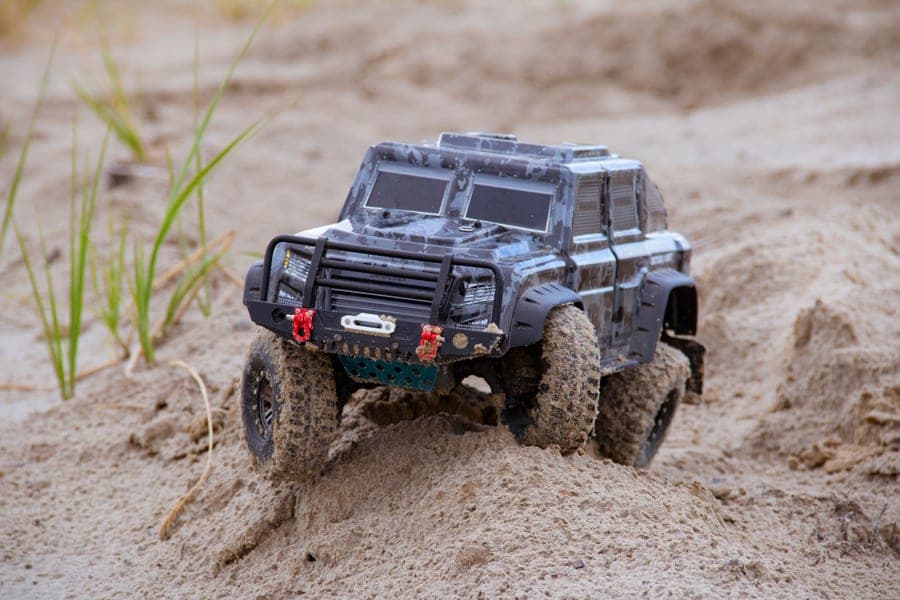 BEZGAR HM161BEZGAR calls it hobby-grade and, unusually at this price, largely means it — and two batteries come in the box. | Bridging toy to hobby | 8.2 | |
| 3 | Traxxas Bandit XL-5The lowest, lightest car in the Traxxas 1/10 range, and the cheapest entry to that parts network. | Cheapest way into Traxxas | 8.3 | |
| 4 | 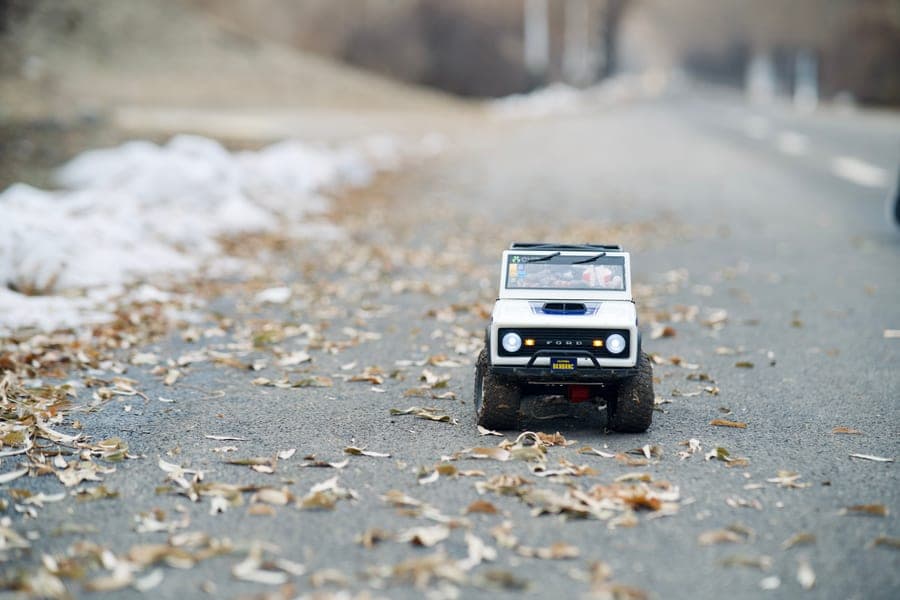 Losi Mini-BA small racing buggy that teaches real car control, because two-wheel drive punishes clumsy throttle. | Learning to drive properly | 8.1 |
Illustrative photo — not this exact model.
#1 · The safest big gift
Traxxas Slash 4X4 BL-2s
The short-course truck that half the hobby owns, which is exactly why parts are never a problem.
9.1/10our score for this use
A short-course truck is the enclosed-wheel, pickup-bodied shape used in desert racing: the bodywork covers the wheels, so it survives contact far better than an open-wheel buggy. The BL-2s version is brushless and runs on a 2-cell LiPo or a 6-7 cell NiMH battery.
- Size:
- 1/10
- Drive:
- Shaft-driven 4WD
- Motor:
- brushless motor
What it does well
- Enclosed wheels make it the most crash-tolerant shape in the hobby for a beginner
- Traxxas parts are stocked in hobby shops across the country and ship next day online
- A settled, decade-old platform: every part, upgrade and how-to video already exists
What it does badly
- Traxxas lists no battery and no charger in the box, so budget for both before it can be driven
- The total spend lands well past $300 once a battery and charger are added
- Fast enough that a first-timer should start in the reduced-power mode, not at full throttle
Specifications from the Traxxas Slash 4X4 BL-2s product page.
Illustrative photo — not this exact model.
#2 · Bridging toy to hobby
BEZGAR HM161
BEZGAR calls it hobby-grade and, unusually at this price, largely means it — and two batteries come in the box.
8.2/10our score for this use
A 1:16 truck, so roughly the size of a shoebox. BEZGAR states a top speed above 40 km/h — around 25 mph — with four-wheel drive and a rechargeable pack, or two of them on the twin-battery version.
- Size:
- 1:16
- Drive:
- 4WD
- Motor:
- brushed motor
What it does well
- Real four-wheel drive and enough ground clearance for grass and gravel
- Twin-battery versions exist, which is the difference between a long afternoon and a short one
- BEZGAR sells replacement bodies and parts directly, which most toy brands do not
What it does badly
- Parts are BEZGAR-only — nothing sits on the shelf at a local hobby shop
- Quick enough to break things, and the plastic is not Traxxas plastic
- The steering servo is the usual weak point at this price
Specifications from BEZGAR's HM161 product page.
Illustrative photo — not this exact model.
#3 · Cheapest way into Traxxas
Traxxas Bandit XL-5
The lowest, lightest car in the Traxxas 1/10 range, and the cheapest entry to that parts network.
8.3/10our score for this use
A classic rear-motor two-wheel-drive buggy with a brushed XL-5 speed control. It gives up the all-wheel-drive grip of its siblings and, in exchange, costs less and is more forgiving of crashes because there is less of it to break.
- Size:
- 1/10
- Drive:
- 2WD
- Motor:
- brushed motor
What it does well
- The cheapest route into Traxxas parts availability and build quality
- Low and light: it survives crashes that bend taller trucks
- Two-wheel drive is simpler mechanically, so there is less to go wrong
What it does badly
- Two-wheel drive is hard work in wet grass or loose dirt
- Battery and charger are extra
- Less impressive to look at than a monster truck, which matters with younger children
Specifications from Traxxas' own XL-5 model comparison.
Illustrative photo — not this exact model.
#4 · Learning to drive properly
Losi Mini-B
A small racing buggy that teaches real car control, because two-wheel drive punishes clumsy throttle.
8.1/10our score for this use
A buggy is the low, wide, open-wheel shape used in off-road racing. The Mini-B is a small, light two-wheel-drive version — the kind of car that rewards smooth inputs and shows you immediately when you were heavy-handed.
- Size:
- 1/16
- Drive:
- 2WD
- Motor:
- brushed motor
What it does well
- Low and wide, so it barely rolls over — the opposite problem to a monster truck
- Teaches throttle and steering control better than a four-wheel-drive car that flatters everyone
- Light enough that crashes rarely break anything
What it does badly
- Two-wheel drive struggles in long grass and loose dirt
- Less immediately exciting than a big truck for a younger child
- Small wheels mean small obstacles stop it
Specifications from Losi's mini range.
How to decide in one question
- Where will it actually be driven? Grass or dirt, pick 4WD. Driveway, sidewalk or a smooth indoor floor, 2WD is fine and cheaper.
- Who is driving it? Under about twelve, or a complete beginner of any age: 4WD. A patient driver who wants to learn: 2WD.
- What is the budget? Below roughly $100 for a hobby-grade car, 2WD is where the honest options are. Above that, both are available.
- Will it be driven in the wet? 4WD handles wet grass far better, but needs cleaning afterward. A 2WD car in the wet mostly just spins.
Common misconceptions
- 4WD is not automatically faster. Top speed comes from the motor, the gearing and the battery. Four-wheel drive gets you to that speed more reliably on loose ground; on pavement a 2WD car with the same motor is often quicker, because it is lighter.
- 2WD is not a toy-grade signal. Some of the best-engineered hobby cars ever made are 2WD, and plenty of cheap toy cars claim 4WD.
- Four-wheel drive does not mean four-wheel steering. Only the front wheels steer on almost every RC car, regardless of drive layout.
- More drive does not mean more durable. The extra driveline is extra things to break. A light 2WD car is often the more robust choice for a clumsy driver on a hard surface.
Where this fits with the other decisions
Drive layout is one of four choices that together decide a purchase: drive, motor type, scale and grade. Brushed vs brushless covers the motor, RC car scale sizes covers the size, and hobby grade vs toy grade is the one that reframes the whole purchase. Work through all four and the shortlist usually comes down to two cars.
How we assessed this
From the mechanical difference outward: what each layout does on each surface, what it costs to buy and to keep running, and what it asks of the driver. The cars named above are drawn from this site's own registry, and every specification quoted on their cards comes from the manufacturer's listing. We do not test these products first-hand — our methodology page explains exactly what that means.