Before you buy
What is a gyro in an RC car?
It is a small sensor that notices the car starting to spin and corrects the steering before you could. On a drift car it is the difference between learning and giving up. On a basher it is mostly a marketing line.
By Ryder M. · Published October 6, 2026 · Last reviewed
Shock & Servo is reader-supported. If you buy through a link on this page we may earn a commission, at no extra cost to you. It never changes which products we pick or the order we rank them in — the full rules are on our methodology page and our affiliate disclosure.
A gyro in an RC car is a small electronic stabilizer that senses the car beginning to rotate and automatically adds a correction to the steering — counter-steering faster and more precisely than any human thumb can. On a rear-wheel-drive drift car it is close to essential: it is what makes holding a controlled slide learnable rather than infuriating, and it is why the MST RMX 2.5 RTR ships with one already fitted. On a four-wheel-drive basher it is a nice-to-have at best, because the car was not fighting to spin in the first place.
Short version: a gyro detects unwanted rotation and corrects the steering for you. Buy a drift car with one included. Ignore the feature on an off-road truck — grip, tires and suspension matter far more there.
How it works, in one paragraph
The gyro contains a rate sensor that measures how fast the car is rotating around its vertical axis. It sits between the receiver and the steering servo. When you give a steering command it passes it through; when it detects the car rotating more than your command asked for — the back stepping out — it adds its own counter-steer on top, in milliseconds. The amount of correction is adjustable, usually with a small dial or a channel on the transmitter, and getting that amount right is most of the setup. Too little and the car spins; too much and the steering fights you.
Why drift cars need one
A drift car is deliberately set up to break traction at the rear and slide. The skill is holding that slide at a constant angle, which in a full-size car is done with constant tiny steering corrections — and at RC speed and scale, those corrections happen far faster than a person can make them through a steering wheel on a transmitter. Without a gyro a rear-wheel-drive drift car spins almost immediately for a beginner. With one, the gyro handles the fast corrections and the driver handles the line and the throttle, which is a learnable division of labor.
This is why a gyro counts as a specification rather than a gadget on this category. The best RC drift cars treats it as a buying criterion, and both drift cars on this site — the MST RMX 2.5 and the Redcat RDS — are judged partly on it.
Where a gyro is and is not worth having
| Type of car | Gyro worth it? | Why |
|---|---|---|
| RWD drift car | Essential | Without it a beginner spins on every corner |
| On-road touring car | Sometimes | Helps on low-grip surfaces and at high speed |
| 4WD off-road basher | Rarely | Four-wheel drive already resists spinning; grip and suspension dominate |
| Rock crawler | No | Nothing happens fast enough for it to matter |
| High-speed straight-line running | Yes | Small steering twitches at 50 mph are what cause the crash |
| Toy-grade car | No | The steering resolution is not fine enough to benefit |
Stability systems that are not quite gyros
Several manufacturers build stability assistance into their cars and call it something else. Traxxas' TSM — Traxxas Stability Management — works on the same principle as a gyro, sensing unwanted rotation and trimming the steering, and it is sold as an aid to driving a powerful car on loose or slippery ground rather than as a drift aid. Drive modes are a different thing again: the Training Mode on many Traxxas cars simply reduces power, and the TRX-4M's Sport, Trail and Crawl settings change throttle response. Both are useful for a beginner and neither is a gyro.
Setting one up
- Start with the gain low. Around a quarter of the available adjustment. Too much gain is more unpleasant to drive than none at all.
- Check the direction. A gyro wired or set backwards makes the car worse immediately — hold the car up, turn it, and confirm the wheels steer into the correction rather than away from it.
- Raise the gain until the car stops spinning, then stop. The point where it just holds a slide is the right setting.
- Expect to change it by surface. Dusty asphalt needs more gain than clean asphalt. This is a dial you will keep touching.
- Turn it off once to feel the difference. It is the quickest way to understand what it is actually doing, and the fastest way to appreciate it.
Cars where the gyro question comes up
| # | Product | Best for | Score | Price |
|---|---|---|---|---|
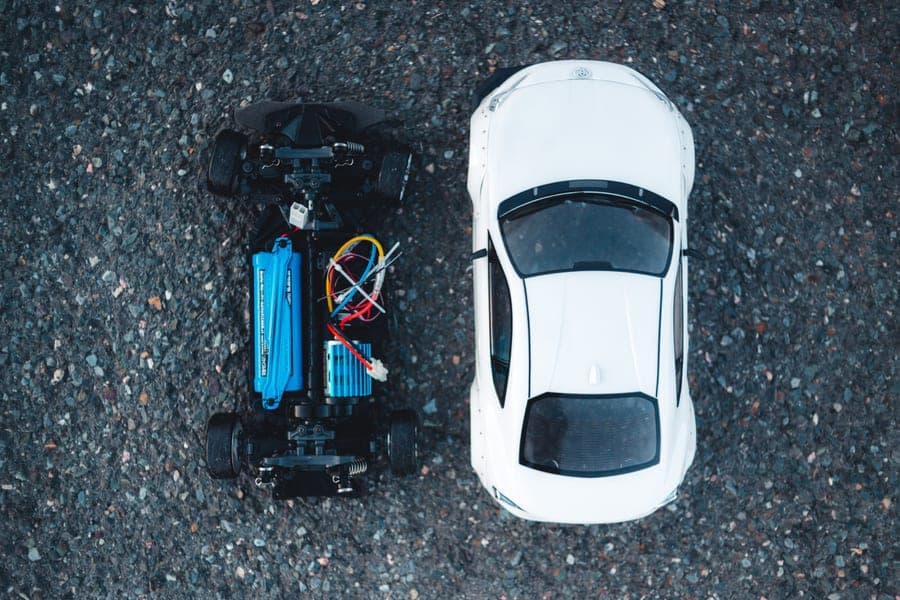
| 1 | MST RMX 2.5 RTRA purpose-built rear-wheel-drive drift car that arrives assembled, balanced and with a gyro already fitted. | Real drifting | 8.3 | |
| 2 | 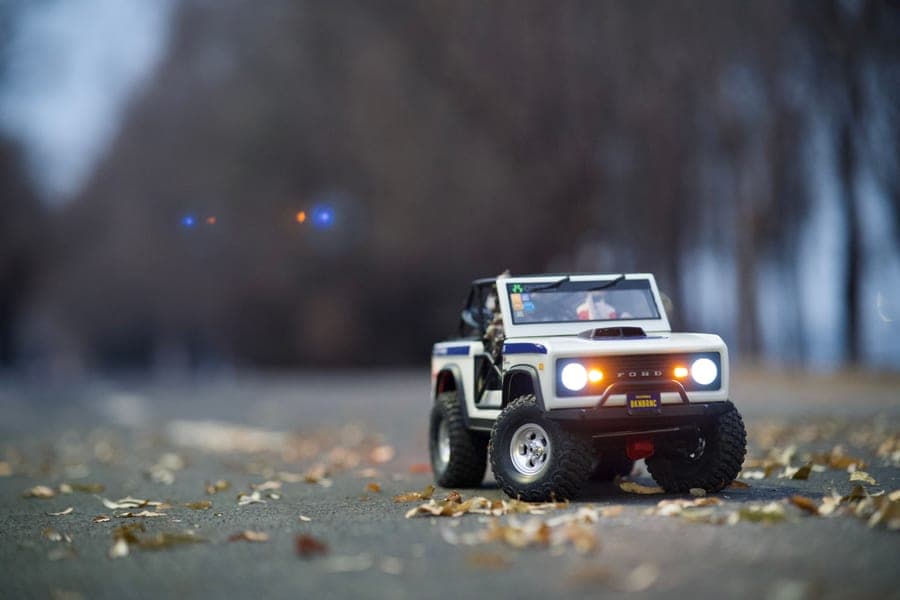 Redcat RDSA ready-to-run rear-wheel-drive drift platform that undercuts the specialist brands. | Cheaper way into drift | 8.0 | |
| 3 | 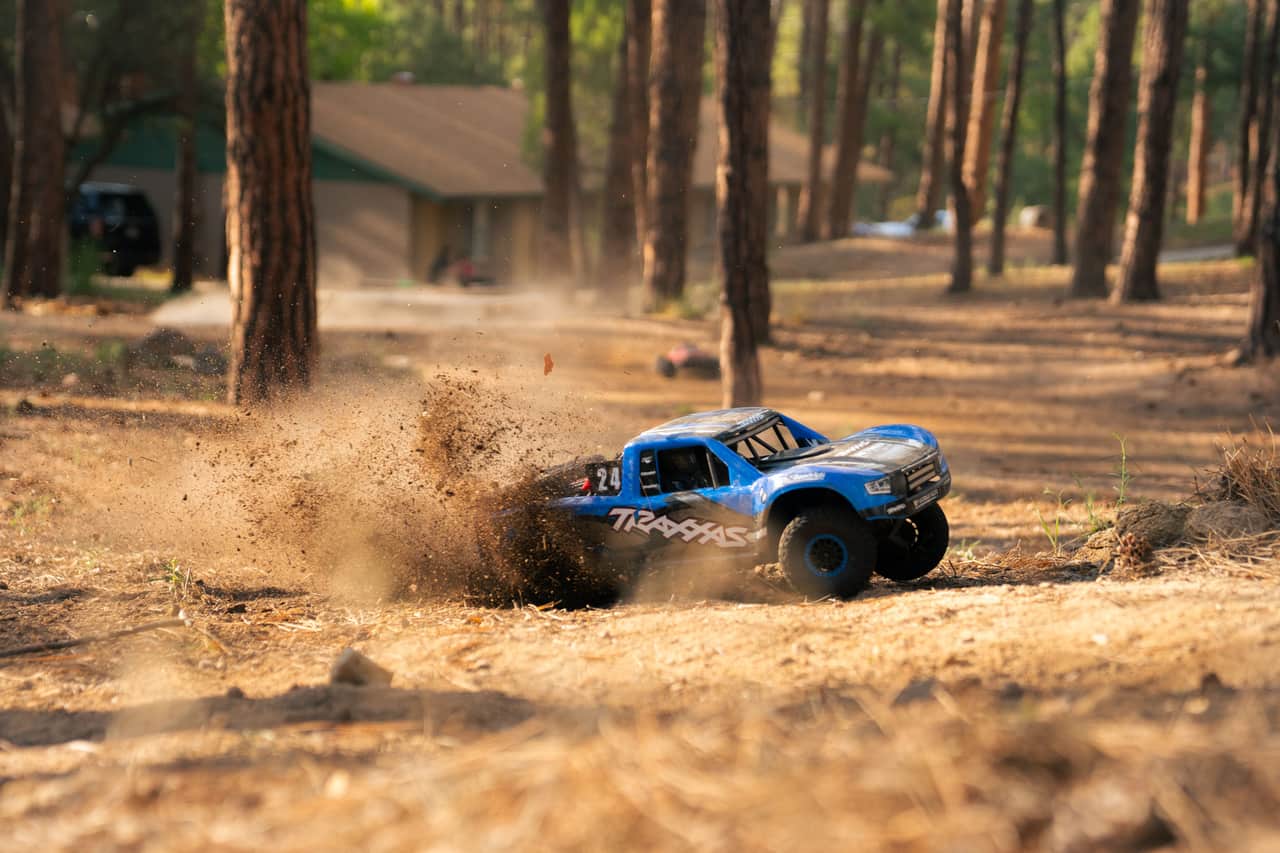 Traxxas Slash 4X4 BL-2sThe short-course truck that half the hobby owns, which is exactly why parts are never a problem. | The safest big gift | 9.1 |
Illustrative photo — not this exact model.
#1 · Real drifting
MST RMX 2.5 RTR
A purpose-built rear-wheel-drive drift car that arrives assembled, balanced and with a gyro already fitted.
8.3/10our score for this use
Drifting is deliberately sliding the car sideways through a corner. A gyro is a small electronic stabilizer that counter-steers faster than a human can, which is what makes a rear-wheel-drive drift car learnable rather than infuriating. MST builds the RMX from the ground up as a drift chassis rather than converting a touring car.
- Size:
- 1/10
- Drive:
- 2WD (rear)
- Motor:
- brushed motor
What it does well
- Designed as a drift car, not adapted from something else — the geometry is right out of the box
- Gyro included in the ready-to-run package, which is the difference between learning and giving up
- Brushed and brushless versions exist, so you can start calm and move up
What it does badly
- Smooth flat surfaces only: it is useless on grass, gravel or a bumpy driveway
- Drifting takes real practice. A child expecting instant results will be frustrated
- The hard plastic drift tires wear down and are a consumable
Specifications from MST's own RMX 2.5 RTR page.
Illustrative photo — not this exact model.
#2 · Cheaper way into drift
Redcat RDS
A ready-to-run rear-wheel-drive drift platform that undercuts the specialist brands.
8.0/10our score for this use
Redcat's competition-style drift chassis, sold ready to run. It is the usual Redcat proposition: a specification that normally costs more, backed by the company's own parts catalog rather than a hobby-shop shelf.
- Size:
- 1/10
- Drive:
- 2WD (rear)
- Motor:
- brushless motor
What it does well
- Real adjustable drift geometry at a lower price than the specialist brands
- Redcat stocks its own spares, so consumables are easy to reorder
- A good platform to modify as skills improve
What it does badly
- Smooth surfaces only, like every drift car
- Setup matters, and a beginner will spend time learning what each adjustment does
- Less local parts availability than the big two brands
Specifications from Redcat's product and parts catalog.
Illustrative photo — not this exact model.
#3 · The safest big gift
Traxxas Slash 4X4 BL-2s
The short-course truck that half the hobby owns, which is exactly why parts are never a problem.
9.1/10our score for this use
A short-course truck is the enclosed-wheel, pickup-bodied shape used in desert racing: the bodywork covers the wheels, so it survives contact far better than an open-wheel buggy. The BL-2s version is brushless and runs on a 2-cell LiPo or a 6-7 cell NiMH battery.
- Size:
- 1/10
- Drive:
- Shaft-driven 4WD
- Motor:
- brushless motor
What it does well
- Enclosed wheels make it the most crash-tolerant shape in the hobby for a beginner
- Traxxas parts are stocked in hobby shops across the country and ship next day online
- A settled, decade-old platform: every part, upgrade and how-to video already exists
What it does badly
- Traxxas lists no battery and no charger in the box, so budget for both before it can be driven
- The total spend lands well past $300 once a battery and charger are added
- Fast enough that a first-timer should start in the reduced-power mode, not at full throttle
Specifications from the Traxxas Slash 4X4 BL-2s product page.
Should a beginner buy a car with a gyro?
If the car is a rear-wheel-drive drift car, yes, and buy one that includes it rather than planning to add it. If the car is anything else, the gyro should not decide the purchase: a beginner on an off-road truck is far better served by four-wheel drive, decent tires and a reduced-power mode than by electronic stabilization. The best first RC cars and 2WD vs 4WD cover what does actually matter at that stage.
How we assessed this
From what the device measures and where it sits in the car's control chain, and from how the manufacturers of the drift cars on this site describe their own packages — MST ships the RMX 2.5 RTR with a gyro fitted, which is stated on its own product page and linked in Sources. We do not test these products first-hand; our methodology page explains what that means.