Looking after it
How to clean an RC car
The temptation is a garden hose. The right answer is a brush, some compressed air and five minutes — because water does not damage an RC car on the day you wash it, it damages it over the following month.
By Ryder M. · Published October 6, 2026 · Last reviewed
Shock & Servo is reader-supported. If you buy through a link on this page we may earn a commission, at no extra cost to you. It never changes which products we pick or the order we rank them in — the full rules are on our methodology page and our affiliate disclosure.
Clean an RC car dry wherever possible: take the body off, blow the loose dirt out with compressed air, brush the rest off with a stiff paintbrush, and wipe the chassis with a damp cloth rather than a running tap. Then dry everything and put a drop of oil on any exposed metal. The reason is not that water instantly kills electronics — many hobby-grade cars have waterproof speed controls — but that water sits in bearings and in the gaps around metal parts and produces rust over the following weeks. The car that dies from washing dies a month later.
Short version: body off, compressed air, stiff brush, damp cloth, dry thoroughly, oil the metal. Never a pressure washer, never a hose into the chassis, and never put the battery back in until everything is dry.
The five-minute routine after a normal run
- Disconnect and remove the battery. First, always. Everything else is safer with no power in the car.
- Take the body off. Four body clips. Most of the dirt is underneath it and you cannot reach any of it with the body on.
- Blow it out with compressed air. A can of air or a low-pressure compressor gets grit out of the suspension, the gearbox vents and around the motor far better than any brush.
- Brush the chassis and the wheels. A stiff paintbrush, an old toothbrush for the tight corners. Work from the top down.
- Wipe with a barely damp cloth, then dry with a clean one. Damp, not wet, and not into the electronics.
- Check as you go. This is the real value of cleaning: you will find the cracked suspension arm, the loose screw and the wheel nut working free. Five minutes of cleaning catches the thing that would have ended the next run.
What never to get wet
| Part | Water? | Why |
|---|---|---|
| Speed control and receiver | Only if rated waterproof, and even then sparingly | Water inside a non-sealed ESC is usually terminal |
| Motor | No | A brushed motor's internals corrode; a wet bearing seizes |
| Bearings | No | Water displaces the grease, and the rust starts quietly |
| Battery and its connector | Never | Remove the pack before cleaning anything |
| Chassis, arms, wheels, body | Yes, with a damp cloth | These are the parts you are actually cleaning |
| Tires | Yes | Rinse and let them dry fully before storing |
After mud
Mud is the one case where some water is unavoidable, because dry mud is concrete. Let it dry first, then crack it off with a brush — far more comes away than you expect. For what remains, use a damp cloth and work in sections, and do not direct a stream of water anywhere near the electronics. Afterwards, pay particular attention to the wheel bearings and the driveshafts, which are where the last of the grit hides, and oil the exposed metal when you are done.
After sand
Sand is the worst surface in the hobby for wear, because it is abrasive and it finds its way into every bearing and gear mesh. Compressed air is essential here rather than optional, and the gearbox is worth opening if the car has been run on a beach. Rinse the tires separately. Our roundup of the best RC cars for sand explains which sealed designs cope with this and which do not.
After snow and wet grass
Snow is water that arrives slowly, which makes it sneakier than mud. Bring the car inside, dry it with a cloth and then leave it somewhere warm — not hot — for a few hours before storing it, and oil anything metal. Wet grass does the same thing with the addition of clippings packed into the driveshafts. The best RC cars for snow covers which cars are built for this; the cleaning routine afterwards is the same for all of them.
Never use a pressure washer
It is the quickest way to ruin a car that was otherwise fine. A pressure washer drives water past every seal the manufacturer fitted, strips the grease out of bearings and differentials, and forces grit further in rather than out. Videos of people doing it exist. So do the follow-up videos about the replacement bearings. A brush and a can of air cost less than one set of bearings.
The three things that make this easy
| # | Product | Best for | Score | Price |
|---|---|---|---|---|
| 1 | 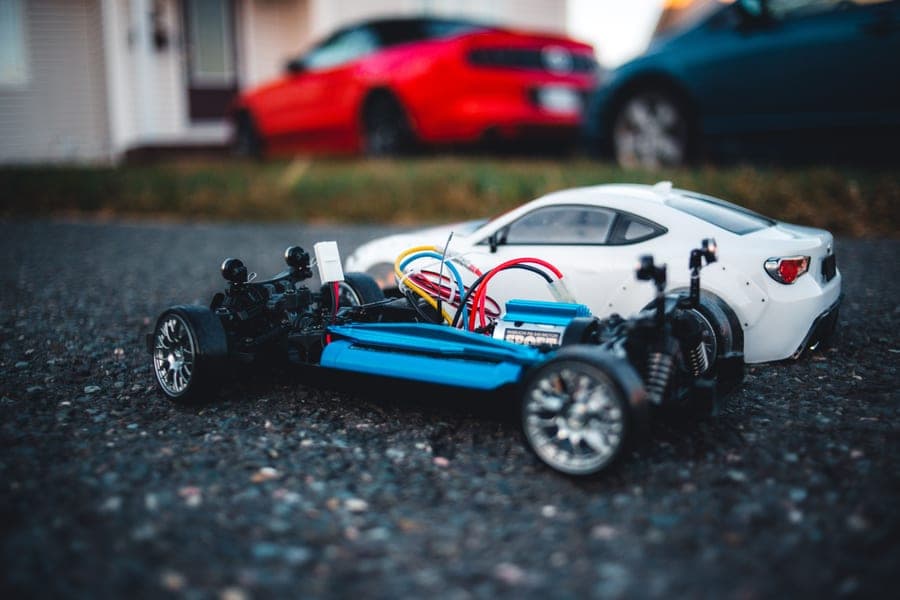 An RC hex driver tool setThe L-shaped keys in the box round off after a few uses. A proper driver set is the first upgrade nobody thinks of. | Fixing it yourself | 8.3 | |
| 2 |  An RC car maintenance standHolds the car with its wheels off the ground so you can work on it without it rolling away. | A small extra gift | 7.8 | |
| 3 |  A LiPo-safe charging bagThe cheapest sensible thing you can add to any gift that includes a LiPo battery. | Charging safely | 8.5 |
Illustrative photo — not this exact model.
#1 · Fixing it yourself
An RC hex driver tool set
The L-shaped keys in the box round off after a few uses. A proper driver set is the first upgrade nobody thinks of.
8.3/10our score for this use
Hobby-grade cars are held together with small hex screws and nuts, and the folded metal keys included in the box are made down to a price. A set of proper hex drivers and nut drivers turns a twenty-minute repair into a five-minute one.
What it does well
- Makes repairs quick enough that they actually get done instead of shelving the car
- Stops screw heads being rounded off by a badly fitting key
- Works on every brand in this hobby
What it does badly
- Not an exciting thing to unwrap on its own
- Cheap sets use soft steel that wears quickly
- You need the right sizes for the specific car, usually metric
Illustrative photo — not this exact model.
#2 · A small extra gift
An RC car maintenance stand
Holds the car with its wheels off the ground so you can work on it without it rolling away.
7.8/10our score for this use
A simple platform that lifts the car off the bench. It sounds trivial until the first time someone tries to check the wheels of a car that keeps driving itself off the table.
What it does well
- Cheap, useful, and the kind of thing an owner never buys for themselves
- Makes checking wheels and suspension a one-person job
- Most are adjustable across scales
What it does badly
- Purely a bench accessory — it adds nothing to the driving
- The plastic ones flex under a heavy 1/8 truck
- Takes up bench space
Illustrative photo — not this exact model.
#3 · Charging safely
A LiPo-safe charging bag
The cheapest sensible thing you can add to any gift that includes a LiPo battery.
8.5/10our score for this use
A fire-resistant pouch that the battery sits inside while it charges. LiPo batteries very rarely fail, but when they do they do it energetically, and every experienced owner charges inside a bag or a metal tin.
What it does well
- Costs very little and removes the one genuine hazard in this hobby
- Doubles as somewhere to store packs between uses
- Fits any battery, any brand
What it does badly
- Not a magic shield — a charging battery still needs to be attended
- The cheap ones have flimsy zips
- One more thing to remember to use
Storage, which is half the job
- Store the battery separately, at partial charge. Not in the car, not full, and in a LiPo-safe bag or metal tin. Storing a LiPo full is the fastest way to ruin a good pack.
- Store the car with the body on to keep dust off the electronics, and off the ground so the tires are not loaded.
- Keep a tool set with the car. A repair that takes five minutes gets done; one that needs a trip to find a hex key does not.
- Write down what you fixed. On a car that is used weekly you will forget which arm you replaced, and the pattern of what breaks tells you what to keep spares of.
How we assessed this
From how these vehicles are built: which parts are sealed, which carry grease that water displaces, and which are consumable. Waterproofing claims are the manufacturers' own, and where a car on this site is described as having a waterproof speed control that comes from the maker's product page. We do not test these products first-hand — our methodology page explains what that means.