Head to head
Traxxas Rustler vs Stampede
Two Traxxas trucks built on closely related 1/10 platforms, separated almost entirely by ride height. One of them corners; the other one climbs. The ground you have decides it.
By Ryder M. · Published October 10, 2026 · Last reviewed
Shock & Servo is reader-supported. If you buy through a link on this page we may earn a commission, at no extra cost to you. It never changes which products we pick or the order we rank them in — the full rules are on our methodology page and our affiliate disclosure.
Buy the [Stampede 4X4](#traxxas-stampede-4x4) if the ground is a real lawn, gravel, or the rubble at the edge of a driveway, and buy the [Rustler 4X4 VXL](#traxxas-rustler-4x4-vxl) if the ground is flat and open and speed is the point. The two trucks are close relatives on the 1/10 Traxxas 4X4 platform, and almost every difference between them comes from one decision: the Stampede is a monster truck with tall tires and long travel, the Rustler is a stadium truck sitting much lower on the same kind of running gear.
Short version: ride height versus speed. The Stampede drives over obstacles that stop the Rustler dead, and its brushed power system is calmer, which suits a younger or newer driver. The Rustler 4X4 VXL is the far faster truck — Traxxas states 65+ mph with 3S and the speed gearing — and its Training Mode halves the power while the driver learns. Neither includes a battery or a charger.
Rustler vs Stampede, specification by specification
| Rustler 4X4 VXL | Stampede 4X4 | |
|---|---|---|
| Truck type | Stadium truck — low, open wheels | Monster truck — tall tires, long travel |
| Scale | 1/10 | 1/10 |
| Drivetrain | Shaft-driven 4WD | Shaft-driven 4WD |
| Power | Brushless VXL, up to 3S LiPo | Brushed |
| Speed Traxxas states | 65+ mph with 3S and optional speed gearing | Not quoted at the brushless models' level |
| Ground it suits | Flat, open, smooth-ish | Lawn, gravel, broken ground, rubble |
| Cornering | Low center of gravity, holds a line | Tall and tippy — rolls on sharp turns |
| Power limiter | Training Mode, 50% throttle and reverse | Brushed power is naturally calmer |
| Battery and charger included | No | No |
| Best for | Speed on open ground | A rough yard, a younger driver |
Ride height is the whole argument
Most people do not drive RC trucks on a track. They drive them on a lawn, which is tall and wet; or on gravel, which is loose and uneven; or on the broken concrete behind a garage. Those surfaces defeat low vehicles in an unglamorous way — the chassis beaches on something and the wheels spin in the air. The Stampede's tall tires and long suspension travel are the direct answer to that, and the difference is not subtle: it drives over curb edges, tree roots and clumps of cut grass that stop the Rustler completely.
What that height costs is cornering. A high center of gravity wants to roll, and a beginner with a monster truck spends the first week putting it back on its wheels. That is not damage — a Stampede landing on its roof is doing its job — but it is a real part of the experience, and some people find it maddening rather than funny. The Rustler sits low, holds a line, and corners like something that was designed to race. The best RC cars for grass covers the surface question in full.
Brushless versus brushed, in practice
The Rustler 4X4 VXL is brushless and the Stampede 4X4 is brushed, and on this pair that difference lines up neatly with who each truck is for. Brushless means more power, more speed, more heat and a higher price; brushed means less of all four. Traxxas states 65+ mph for the Rustler with a 3-cell pack and the optional speed gearing, which is a genuinely serious number — fast enough that it needs open ground and a driver who has practiced. The Stampede's brushed system is slower and duller and consequently much easier to hand to a ten-year-old. Brushed vs brushless explains the mechanism rather than just the outcome.
There is a sensible middle path worth naming: the Rustler's Training Mode cuts throttle and reverse to 50%, so the fast truck can be made into a slow truck on the day and unlocked later. That is a better answer than buying the slower truck if you expect the driver to improve quickly, because speed cannot be added to a brushed Stampede nearly as cheaply as it can be unlocked on a VXL.
How we judged the pair
- What is the ground? This single question settles the comparison more often than anything else. Rough ground means ride height; flat ground means the low truck is better in every way.
- Who is driving? A brushed Stampede is a calmer first truck than a 65-mph Rustler, even with the limiter engaged.
- Then rollover tolerance. Monster trucks roll. If that will frustrate the driver rather than amuse them, the low truck wins.
- Then total day-one spend. Neither has a battery or a charger, and the brushless truck wants the better pack.
- Parts support is a tie. Both are long-running 1/10 Traxxas platforms with shared running gear and spares on hobby-shop shelves.
- Honest cons on both. The Stampede is slow and tippy; the Rustler beaches on rough ground and is too fast for a beginner at full power.
The trucks
| # | Product | Best for | Score | Price |
|---|---|---|---|---|
| 1 | Traxxas Stampede 4X4The Traxxas answer when the ground is bad: tall tires, long travel, and it just keeps going. | Tall tires, rough yards | 8.6 | |
| 2 | 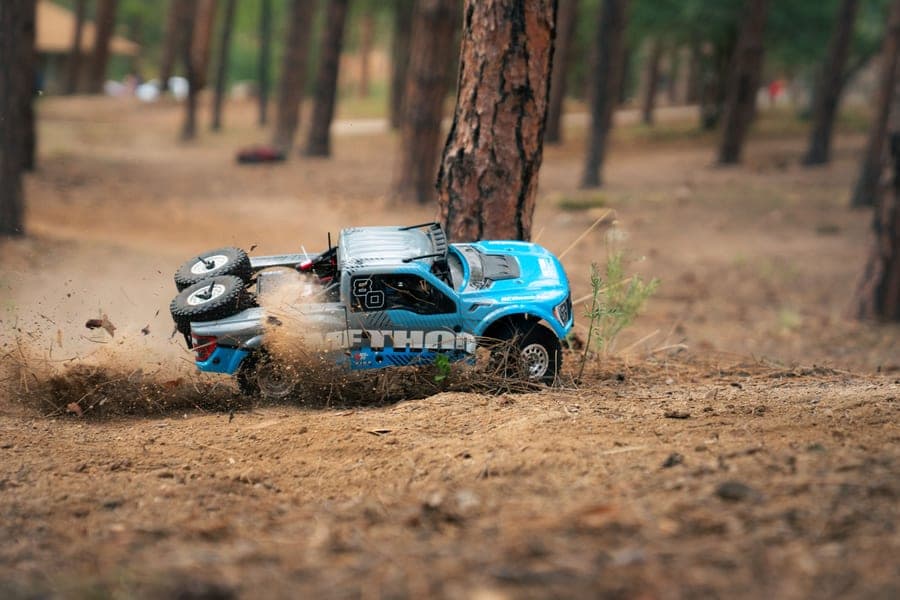 Traxxas Rustler 4X4 VXLVery fast, and the only reason it suits a beginner is the built-in Training Mode that halves the power. | Speed, with a limiter | 8.9 | |
| 3 | 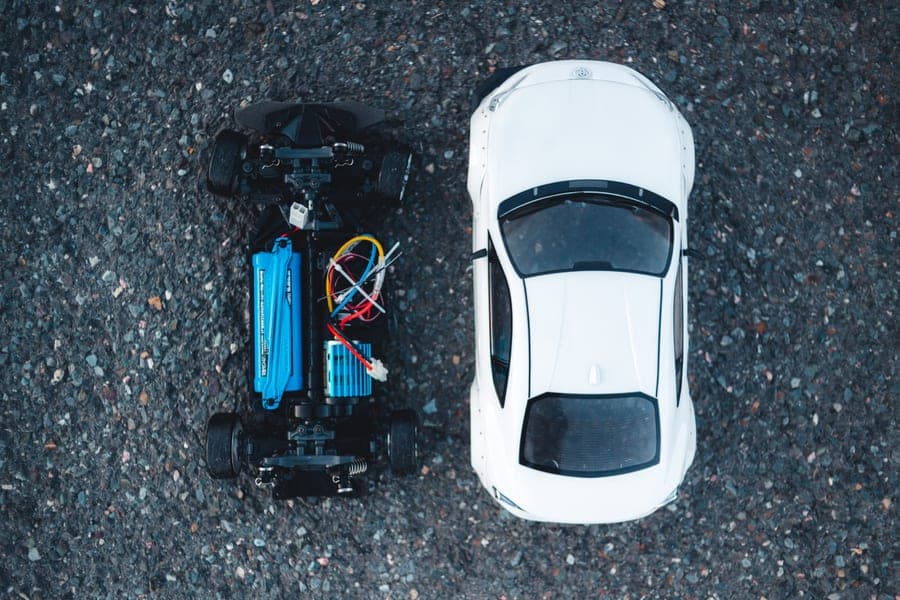 Traxxas Bandit XL-5The lowest, lightest car in the Traxxas 1/10 range, and the cheapest entry to that parts network. | Cheapest way into Traxxas | 8.3 |
Illustrative photo — not this exact model.
#1 · Tall tires, rough yards
Traxxas Stampede 4X4
The Traxxas answer when the ground is bad: tall tires, long travel, and it just keeps going.
8.6/10our score for this use
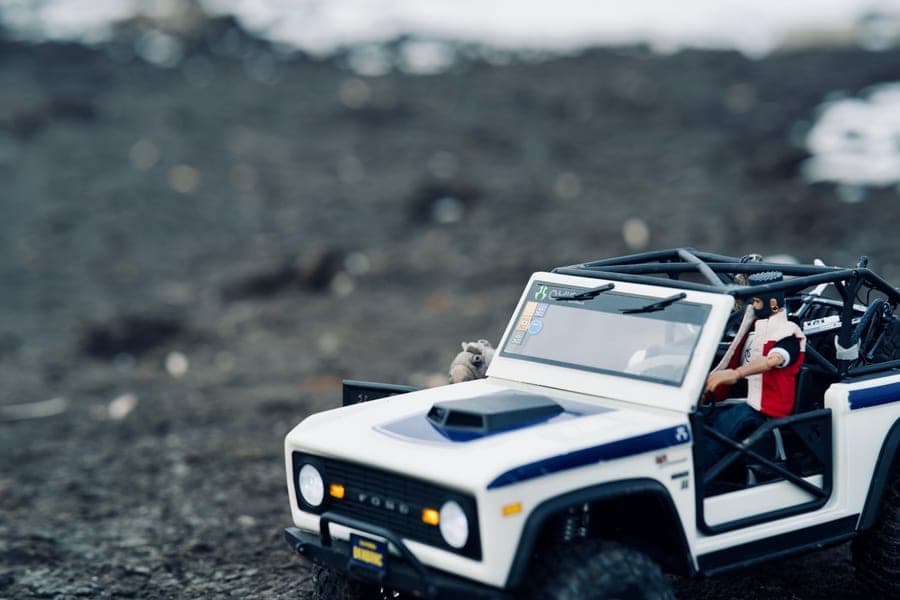
A monster truck version of the same running gear as the Slash and Rustler, with taller tires and more suspension travel. The height costs some cornering speed and buys a lot of ability on grass, gravel and broken ground.
- Size:
- 1/10
- Drive:
- Shaft-driven 4WD
- Motor:
- brushed motor
What it does well
- Goes over lawn, gravel and construction rubble that stops lower cars dead
- Shares its parts with the rest of the Traxxas 1/10 range, so spares are everywhere
- The brushed version is calmer than the brushless trucks, which suits a younger driver
What it does badly
- Tall and tippy — beginners roll it on every sharp turn for the first week
- Battery and charger sold separately
- Slower than the brushless models if speed is what was wanted
Specifications from Traxxas' model and parts finder.
Illustrative photo — not this exact model.
#2 · Speed, with a limiter
Traxxas Rustler 4X4 VXL
Very fast, and the only reason it suits a beginner is the built-in Training Mode that halves the power.
8.9/10our score for this use
A stadium truck — open wheels, big tires, built to jump. Traxxas states 65+ mph with a 3-cell LiPo and the optional speed gearing, and, crucially, a patented Training Mode that cuts throttle and reverse to 50%. You can hand it to a child on the low setting and unlock the rest later.
- Size:
- 1/10
- Drive:
- Shaft-driven 4WD
- Motor:
- brushless motor
What it does well
- Training Mode cuts the power in half — a genuine answer to "this is too fast for them"
- Waterproof electronics and a waterproof receiver box, so weather stops being a factor
- Traxxas parts support, which is the best in the hobby
What it does badly
- At full power it is a 60-plus mph vehicle. That is not a child's toy, and it needs open space
- No battery or charger included — the real cost is meaningfully higher than the sticker
- Open wheels catch on curbs and fences in a way the Slash's bodywork does not
Specifications from the Traxxas Rustler 4X4 VXL product page.
Illustrative photo — not this exact model.
#3 · Cheapest way into Traxxas
Traxxas Bandit XL-5
The lowest, lightest car in the Traxxas 1/10 range, and the cheapest entry to that parts network.
8.3/10our score for this use
A classic rear-motor two-wheel-drive buggy with a brushed XL-5 speed control. It gives up the all-wheel-drive grip of its siblings and, in exchange, costs less and is more forgiving of crashes because there is less of it to break.
- Size:
- 1/10
- Drive:
- 2WD
- Motor:
- brushed motor
What it does well
- The cheapest route into Traxxas parts availability and build quality
- Low and light: it survives crashes that bend taller trucks
- Two-wheel drive is simpler mechanically, so there is less to go wrong
What it does badly
- Two-wheel drive is hard work in wet grass or loose dirt
- Battery and charger are extra
- Less impressive to look at than a monster truck, which matters with younger children
Specifications from Traxxas' own XL-5 model comparison.
If both feel like too much truck
The Bandit XL-5 is the quiet third answer here: a low, light, rear-motor two-wheel-drive buggy with a brushed speed control, and the cheapest route into the Traxxas parts network. It gives up all-wheel-drive grip, which matters in wet grass and loose dirt, and gains the thing that makes it genuinely good for a first-timer — there is less of it to break. A 2WD buggy that is crashed hard usually gets back up. 2WD vs 4WD RC cars covers what you actually give up.
Which to buy
- A normal back yard, with grass and edges and gravel: the Stampede 4X4. Ride height is not a luxury on that ground.
- A car park, a hard court, a field, a skate park: the Rustler 4X4 VXL, started in Training Mode.
- A ten-year-old's first hobby-grade truck: the Stampede. Brushed power is forgiving and the height absorbs mistakes.
- A driver who will outgrow slow in a month: the Rustler, limited now and unlocked later.
- The cheapest honest way into Traxxas: the Bandit XL-5, with a battery and charger budgeted on top.
- Tall tires, but more of them: the best RC monster trucks ranks the wider category.
What to buy alongside either
A pack and a charger first, because neither truck can move without them, and then a second pack. On the Stampede the brushed system is undemanding, so the common 2S sizes are plenty; on the Rustler, the 3-cell packs are what unlock the quoted speed, and that also means a charger that can handle them. The best RC battery chargers covers buying once rather than twice. Then hex drivers, because the folded keys in the box round off, and a repair that is quick gets done while one that is awkward does not.
How we assessed this
By reading both trucks' published Traxxas specifications and then ranking them against the variable that actually decides satisfaction with an RC truck — the ground it will be driven on. Every figure quoted is Traxxas' own and is linked in Sources; where no figure is published we have said so rather than estimated one. No price figures appear anywhere on this site, and every buy control goes to the live retailer listing. We do not test these products first-hand; our methodology page explains what that means here.