Guide
RC car buying guide
There are thousands of RC cars for sale and only six questions that matter. Answer them in order and the choice narrows to two or three cars — usually cheaper ones than you expected.
By Ryder M. · Published October 17, 2026 · Last reviewed

Shock & Servo is reader-supported. If you buy through a link on this page we may earn a commission, at no extra cost to you. It never changes which products we pick or the order we rank them in — the full rules are on our methodology page and our affiliate disclosure.
Buy in this order: who it is for, where it will be driven, how fast it should be, whether it is complete in the box, and whether it can be repaired. Price is the output of those five answers, not an input. Get them in that order and the shortlist is usually two or three cars; start from a budget instead and you will almost certainly buy too much speed and only one battery, which are the two mistakes that end most RC car gifts inside a month.
Direct answer: the single best first RC car for most people is a hobby-grade car in the $100 to $200 range that includes a battery and a charger, is four-wheel drive, and comes from a brand that sells spare parts. The Traxxas LaTrax Rally is the clearest example. Below about $100, buy toy-grade on purpose rather than a cheap imitation of a hobby car.
1. Who is it for?
This decides more than anything else, and the deciding factor is hands rather than age. A hobby-grade transmitter asks for proportional throttle with a trigger and proportional steering with a wheel, simultaneously. Most children can do that at around five; below that a two-button controller is the correct tool rather than a cheaper one. From about eight they can drive properly and will crash hard enough that replaceable parts matter. For an adult, ability is rarely the question and space usually is.
2. Where will it actually be driven?
Be honest about this, because it eliminates most of the market. A lawn needs four-wheel drive and some ground clearance. A driveway or a car park wants a low, grippy, on-road car — off-road tires on tarmac are loud, vague and wear out fast. A small back garden needs a small car, because a 1/10 brushless truck covers twenty yards in about a second and spends its life hitting the fence. Indoors needs something smaller still. Where to drive RC cars covers the realistic options.
3. How fast does it need to be?
Slower than you think. Advertised top speeds are best-case figures from a fresh battery on a smooth surface, and the number is close to irrelevant anyway, because almost nobody holds full throttle for long. Most of the enjoyment in an RC car happens between a quarter and half throttle, placing the car. A brushless 1/10 truck at full power in the hands of a beginner is a broken truck, which is why a model with a power limiter — Traxxas calls it Training Mode — is worth choosing on that basis alone. Speed can be added later with a bigger pack; a smashed chassis cannot be undone. How fast do RC cars go gives the real ranges by type.
4. Is it complete in the box?
Most hobby-grade cars include neither a battery nor a charger. That turns one purchase into three and, on a birthday morning, into a disappointment. Toy-grade cars almost always include both, and a few hobby-grade cars — the LaTrax Rally, the Axial SCX24, the Traxxas TRX-4M — do too. Check the listing for the words battery and charger explicitly, because "ready to run" does not mean ready to drive. Do RC cars come with batteries lists which do.
5. Can it be repaired?
This is the question that separates a car still being driven next year from one on a shelf. A hobby-grade car is assembled from individually replaceable parts that the manufacturer sells as spares and publishes diagrams for; a toy-grade car is a sealed unit, so the first serious breakage usually ends it. Neither is wrong — for a five-year-old, sealed and cheap is right. But above about eight, a car that cannot be fixed is a car with a short life. Hobby grade vs toy grade is the most useful ten minutes of reading in this category.
6. What else will it need?
| Item | Needed? | Why |
|---|---|---|
| Second battery | Almost always | One pack means 20 minutes driving and an hour waiting |
| Charger | If not included | Included wall units are slow; a hobby charger is bought once |
| AA cells for the transmitter | Usually | Rarely in the box, and the run stops without them |
| Hex drivers | From hobby-grade up | Every repair and adjustment needs them |
| Spare suspension arms | If it will be jumped | The part designed to break first |
| Fireproof charging bag | With LiPo packs | Cheap insurance on the one genuine safety risk |
What to buy, by answer
| # | Product | Best for | Score | Price |
|---|---|---|---|---|
| 1 | 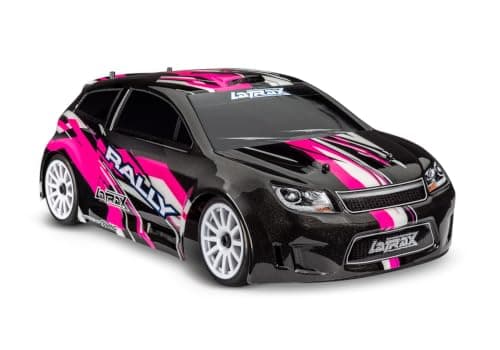 Traxxas LaTrax RallyWaterproof, four-wheel drive, and it comes with a battery and a charger — the friendliest way into the real hobby. | A family's first hobby car | 8.8 | $139.95View on Amazon #ad — how we earn · price as of November 12, 2026 |
| 2 | 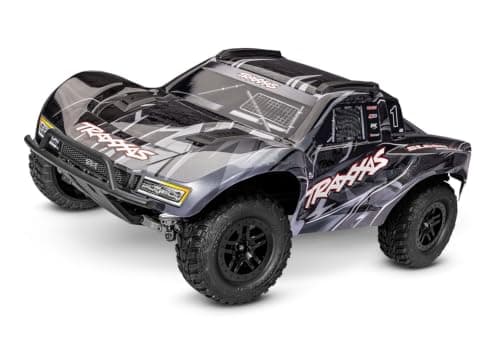 Traxxas Slash 4X4 BL-2sThe short-course truck that half the hobby owns, which is exactly why parts are never a problem. | The safest big gift | 9.1 | $429.95View on Amazon #ad — how we earn · price as of November 12, 2026 |
| 3 | 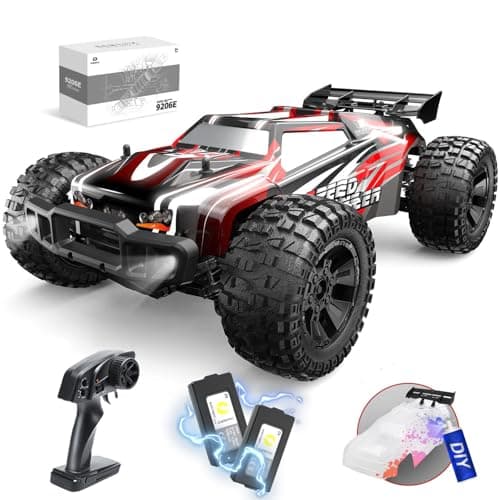 DEERC 9206E 1:10 Monster TruckA full 1:10-size truck at a price that usually buys something half the size — and two batteries again. | A big truck, small money | 8.0 | $104.98View on Amazon #ad — how we earn · price as of November 12, 2026 |
| 4 | 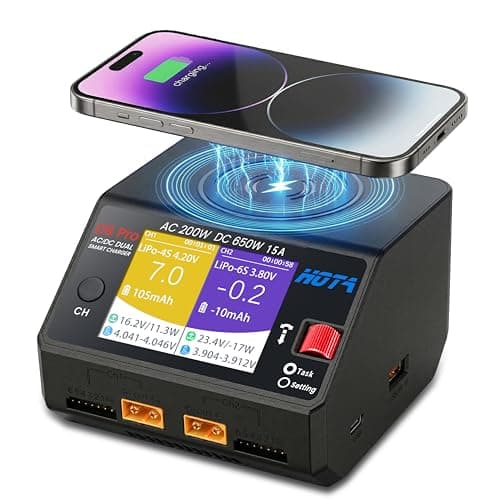 HOTA D6 Pro chargerTwo channels, plugs straight into the wall, and fast enough that charging stops being the bottleneck. | The one to buy once | 8.8 | $109.99$119.99(8% off)View on Amazon #ad — how we earn · price as of November 12, 2026 |
Product photo via Amazon.
#1 · A family's first hobby car
Traxxas LaTrax Rally
Waterproof, four-wheel drive, and it comes with a battery and a charger — the friendliest way into the real hobby.
8.8/10our score for this use
A 1/18 rally car from Traxxas, meaning it is about half the size of the trucks you see at a track but built by a company with parts in real hobby shops. Traxxas lists waterproof all-weather electronics, a 6-volt NiMH battery and a wall charger in the box, and a speed control with drive profiles that include a training mode.
- Size:
- 1/18
- Drive:
- Shaft-driven 4WD
- Motor:
- brushed motor
What it does well
- Battery and charger are included, so the gift works the day it is opened
- Waterproof electronics — wet grass and puddles are genuinely fine
- A training mode that limits the power, then full power later, so the car grows with the driver
- Traxxas parts are stocked by hobby shops and easy to order
What it does badly
- The NiMH battery it ships with is slower and heavier than a LiPo, so the first upgrade is obvious
- Low-slung rally body grounds out on thick grass — it prefers gravel, dirt and pavement
- Costs noticeably more than the toy-grade cars it sits beside on a search results page
Specifications from the Traxxas LaTrax Rally product page.
#ad — how we earn · price as of November 12, 2026
Product photo via Amazon.
#2 · The safest big gift
Traxxas Slash 4X4 BL-2s
The short-course truck that half the hobby owns, which is exactly why parts are never a problem.
9.1/10our score for this use
A short-course truck is the enclosed-wheel, pickup-bodied shape used in desert racing: the bodywork covers the wheels, so it survives contact far better than an open-wheel buggy. The BL-2s version is brushless and runs on a 2-cell LiPo or a 6-7 cell NiMH battery.
- Size:
- 1/10
- Drive:
- Shaft-driven 4WD
- Motor:
- brushless motor
What it does well
- Enclosed wheels make it the most crash-tolerant shape in the hobby for a beginner
- Traxxas parts are stocked in hobby shops across the country and ship next day online
- A settled, decade-old platform: every part, upgrade and how-to video already exists
What it does badly
- Traxxas lists no battery and no charger in the box, so budget for both before it can be driven
- The total spend climbs well above the sticker once a battery and charger are added
- Fast enough that a first-timer should start in the reduced-power mode, not at full throttle
Specifications from the Traxxas Slash 4X4 BL-2s product page.
#ad — how we earn · price as of November 12, 2026
Product photo via Amazon.
#3 · A big truck, small money
DEERC 9206E 1:10 Monster Truck
A full 1:10-size truck at a price that usually buys something half the size — and two batteries again.
8.0/10our score for this use
1:10 is the size most hobby cars are: roughly 17 to 20 inches long, big enough to see across a yard and heavy enough that grass does not throw it around. DEERC quotes around 48 km/h — roughly 30 mph — and includes two batteries.
- Size:
- 1:10 (about 17-20 inches long)
- Drive:
- 4WD
- Motor:
- toy-grade motor
What it does well
- Proper 1:10 size, so it works on real ground instead of only on a driveway
- Two 7.4 volt 1500mAh batteries in the box, around 40 minutes of combined run time, plus a spare body shell
- Some versions include a second body shell
What it does badly
- Not hobby-grade: spares are DEERC-only and thinner than Traxxas or Arrma
- Heavy for its build quality — a bad landing bends parts a hobby chassis would shrug off
- The stock tires wear quickly on asphalt
Specifications from DEERC's own store listing.
#ad — how we earn · price as of November 12, 2026
Product photo via Amazon.
#4 · The one to buy once
HOTA D6 Pro charger
Two channels, plugs straight into the wall, and fast enough that charging stops being the bottleneck.
8.8/10our score for this use
A balance charger looks after each cell inside a LiPo pack individually, which is what keeps the battery healthy and safe. The D6 Pro has a built-in power supply — no separate box to buy — charges two packs at once, and around 1.6A of balance current per cell, which is why it finishes noticeably faster than the pocket chargers.
What it does well
- Built-in AC power supply: it works straight out of the box with no extra purchase
- Two independent channels, so a second pack charges while the first is in the car
- Higher balance current than the small chargers, so charging is genuinely quicker
What it does badly
- Overkill if there is only ever going to be one small battery
- The menu system takes an evening to learn
- It is another box on the bench with its own fan noise
#ad — how we earn · price as of November 12, 2026
The price tiers, honestly
- Under $50. Toy-grade, and that is the right call for a young child. Expect a sealed car, a simple controller and a short life if it is driven hard. The best RC cars under $50.
- $50 to $100. The most competitive tier in the category: tough toy-grade 4WD trucks, usually with two batteries. The best RC cars under $100.
- $100 to $200. Where hobby-grade begins and where most people should be buying. Replaceable parts, real suspension, and occasionally a battery included. The best RC cars under $200.
- Above $200. Brushless power, better materials and the best parts networks — and a battery and charger you will usually buy separately. Worth it for a teenager or an adult who will keep it.
Mistakes that come up again and again
- Buying on advertised top speed. It is a best-case number and it predicts almost nothing about how much the car gets used.
- Buying a brushless car as a first car. Fast enough that a wall arrives before a beginner's reactions do. Buy brushed, or buy brushless with a limiter and leave it on.
- Assuming the battery is included. Check the words explicitly. "Ready to run" refers to assembly, not to contents.
- Ignoring the battery connector. The most common ordering mistake in RC: a pack that does not plug in. RC car battery connectors shows the types.
- Buying a big car for a small space. A 1/10 truck in a small garden is never driven properly. The best RC cars for a backyard covers sizing to the space.
- Forgetting it will break. Not a flaw — a design feature. Budget for a spare part or two and the first breakage is an afternoon's job rather than the end.
How we assembled this guide
The six questions above are the ones that change the answer, ordered by how much they narrow the field — which is why price appears last. Every specification referenced is from the manufacturer's own published product page, linked in Sources, and the price tiers are the brackets buyers actually search for rather than figures we have assigned to products: prices are never written into our copy, and every figure shown on a product is read from Amazon that day and rendered inside the buy button with the date it was read. We do not test these products first-hand, and our methodology page explains exactly what that means.