Batteries
How to store LiPo batteries
Almost every LiPo pack that dies early dies in a drawer rather than in a car. Getting storage right costs nothing and roughly doubles how long a battery stays useful.
By Ryder M. · Published October 10, 2026 · Last reviewed
Shock & Servo is reader-supported. If you buy through a link on this page we may earn a commission, at no extra cost to you. It never changes which products we pick or the order we rank them in — the full rules are on our methodology page and our affiliate disclosure.
Store a LiPo battery at roughly half charge — about 3.8 volts per cell — somewhere cool, somewhere fireproof, and never fully charged or fully flat. For a 2S pack that is around 7.6 volts; for a 3S, around 11.4. Any decent balance charger has a storage mode that will take a pack to that level automatically, charging it up or draining it down as needed, and using it after every session is the single highest-value habit in this hobby.
The direct answer: about 3.8 volts per cell, cool, and in a fire-resistant bag or metal tin. A pack left on a full charge for weeks loses capacity permanently; a pack left completely flat can drop below the voltage a charger will accept and become scrap. Both are avoidable in one button press.
Why full charge is the problem
A lithium polymer cell is under internal stress in proportion to its state of charge. At full charge — 4.2 volts per cell — that stress is at its maximum, and holding a cell there for weeks drives chemical changes that permanently reduce how much charge it can hold. The visible symptom is puffing: the pack swells as gas forms inside the pouch. A puffed pack is not repairable and should not be charged again. That is the whole mechanism, and it explains every piece of advice on this page.
The opposite error is just as expensive. A pack run completely flat and then left can self-discharge below roughly 3 volts per cell, at which point most chargers will refuse it as unsafe — correctly, because charging a deeply discharged lithium cell can cause an internal short. Between those two failure modes sits the storage voltage, which is simply the state where the chemistry is least stressed.
The storage numbers, per pack size
| Pack | Cells | Full charge | Storage target | Do not go below |
|---|---|---|---|---|
| 1S | 1 | 4.2V | about 3.8V | 3.0V |
| 2S | 2 | 8.4V | about 7.6V | 6.0V |
| 3S | 3 | 12.6V | about 11.4V | 9.0V |
| 4S | 4 | 16.8V | about 15.2V | 12.0V |
| 6S | 6 | 25.2V | about 22.8V | 18.0V |
What to look for in the kit that does this
Three things, and only the first is strictly necessary. A charger with a storage mode, which both charges and discharges to reach the target — a charger that can only charge cannot bring a full pack down. Two channels, if more than one pack is in the house, because otherwise storage-charging a weekend's worth of batteries takes all evening. And somewhere fireproof to keep them, which is where the bag comes in: LiPo failures are rare, but they are energetic, and a fire-resistant pouch costs very little against the risk.
If the pack is a Traxxas with an iD chip and the charger is a Traxxas charger, this gets simpler still — the pair recognize each other and there is nothing to configure. That is worth real money for somebody who has never done this before, and are Traxxas batteries worth it weighs that convenience against the price.
What to buy for this
| # | Product | Best for | Score | Price |
|---|---|---|---|---|
| 1 | A LiPo-safe charging bagThe cheapest sensible thing you can add to any gift that includes a LiPo battery. | Charging safely | 8.5 | |
| 2 | 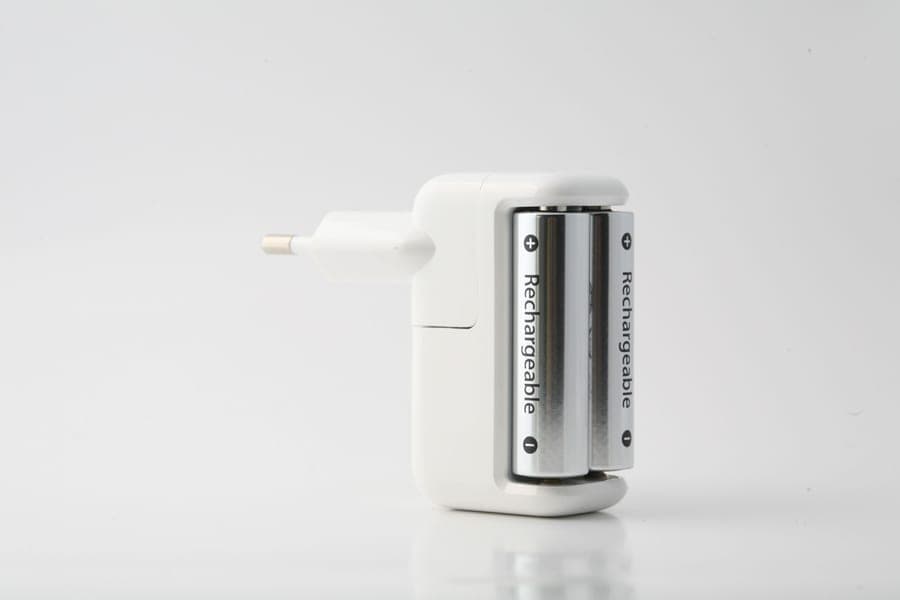 HOTA D6 Pro chargerTwo channels, plugs straight into the wall, and fast enough that charging stops being the bottleneck. | The one to buy once | 8.8 | |
| 3 | ISDT Q6 Nano chargerPocket-sized and capable, as long as you are patient with the balancing stage. | Small and portable | 8.0 | |
| 4 | Gens Ace 2S LiPo batteryThe brand most people settle on once they have been burned by a cheap pack that puffed after a month. | The reliable default | 8.7 |
Illustrative photo — not this exact model.
#1 · Charging safely
A LiPo-safe charging bag
The cheapest sensible thing you can add to any gift that includes a LiPo battery.
8.5/10our score for this use
A fire-resistant pouch that the battery sits inside while it charges. LiPo batteries very rarely fail, but when they do they do it energetically, and every experienced owner charges inside a bag or a metal tin.
What it does well
- Costs very little and removes the one genuine hazard in this hobby
- Doubles as somewhere to store packs between uses
- Fits any battery, any brand
What it does badly
- Not a magic shield — a charging battery still needs to be attended
- The cheap ones have flimsy zips
- One more thing to remember to use
Illustrative photo — not this exact model.
#2 · The one to buy once
HOTA D6 Pro charger
Two channels, plugs straight into the wall, and fast enough that charging stops being the bottleneck.
8.8/10our score for this use
A balance charger looks after each cell inside a LiPo pack individually, which is what keeps the battery healthy and safe. The D6 Pro has a built-in power supply — no separate box to buy — charges two packs at once, and around 1.6A of balance current per cell, which is why it finishes noticeably faster than the pocket chargers.
What it does well
- Built-in AC power supply: it works straight out of the box with no extra purchase
- Two independent channels, so a second pack charges while the first is in the car
- Higher balance current than the small chargers, so charging is genuinely quicker
What it does badly
- Overkill if there is only ever going to be one small battery
- The menu system takes an evening to learn
- It is another box on the bench with its own fan noise
Illustrative photo — not this exact model.
#3 · Small and portable
ISDT Q6 Nano charger
Pocket-sized and capable, as long as you are patient with the balancing stage.
8.0/10our score for this use
A very small DC charger — it needs a separate power supply or a 12V source, which is the trade for the size. Its balance current is 0.5A, so it takes its time finishing a large pack, but for one or two small batteries it is more than enough.
What it does well
- Genuinely small, so it travels with the car rather than living on a bench
- Cheaper than a full bench charger
- Plenty of capability for the small packs used by 1/16 and 1/18 cars
What it does badly
- No built-in mains supply: you need a separate power brick, which eats the price advantage
- Slow to finish balancing on large packs
- Only one channel
Illustrative photo — not this exact model.
#4 · The reliable default
Gens Ace 2S LiPo battery
The brand most people settle on once they have been burned by a cheap pack that puffed after a month.
8.7/10our score for this use
LiPo is the standard rechargeable battery chemistry for RC cars: lighter than the older NiMH type and it holds its power right up to the end of the run rather than gradually fading. 2S means two cells — the size most 1/10 cars take.
What it does well
- Consistent pack-to-pack quality, which is the whole argument for paying more for a battery
- Holds voltage under load, so the car feels the same on lap ten as on lap one
- Sold in all the common connector types and sizes
What it does badly
- Costs more than the budget brands for capacity you can measure but may not notice
- Like all LiPo packs it must be stored at partial charge, not full, or it degrades
- Needs a balance charger — it cannot be charged with the wall plug from a toy car
The routine, in order
- Stop driving before the pack is empty. When the car noticeably slows, come in. Running a LiPo to the point the car stops is how packs die young.
- Let the pack cool to room temperature before putting it on the charger. A hot pack charged immediately ages faster.
- Put it in storage mode, not charge mode, unless you are driving again within a day or two. One press, then walk away.
- Keep packs somewhere cool and dry — a garage shelf is better than a sunny windowsill, and a cupboard is better than a car.
- Keep them in a fire-resistant bag or a metal tin, including in storage, not just while charging.
- Check them every month or two over a long break. A quick voltage reading catches a pack that has drifted down before it drifts out of reach.
Over a winter, or any long break
Storage voltage is a target, not a one-time setting: packs self-discharge slowly, and over four or five months a pack put away at 3.8 volts per cell can drift meaningfully lower. For a break of a month or two, set storage charge and forget about it. For a whole winter, set storage charge, then check the voltage once in the middle and top it back up if it has drifted. That one check is the difference between picking up where you left off in spring and buying new packs.
It is also worth knowing that cold itself is not the enemy in storage — cool is actually better than warm. What you must not do is charge or hard-discharge a pack that is near freezing; let it come up to room temperature first. If the car is going away for the winter, how long do RC car batteries last and making an RC battery last longer cover the rest of the lifespan question.
If the car is NiMH instead
Then almost none of this applies, which is a genuine argument for NiMH in a household new to the hobby. NiMH tolerates being left part-charged, being fully drained and being charged on a simple charger — all the things that shorten a LiPo's life. It is heavier, slower and has less run time for the same size, and most people move to LiPo within a few months anyway, but as a first battery for a car that will be used occasionally it is the forgiving choice. LiPo vs NiMH sets both out side by side.
How we assembled this guide
The per-cell voltages above are the standard figures for lithium polymer chemistry — 4.2 volts full, approximately 3.8 volts at storage, 3.0 volts as the practical floor — and they are the values the storage modes on hobby balance chargers target. We have not invented any number on this page and have published no price figures anywhere on this site. We do not test these products first-hand; our methodology page explains what that means.